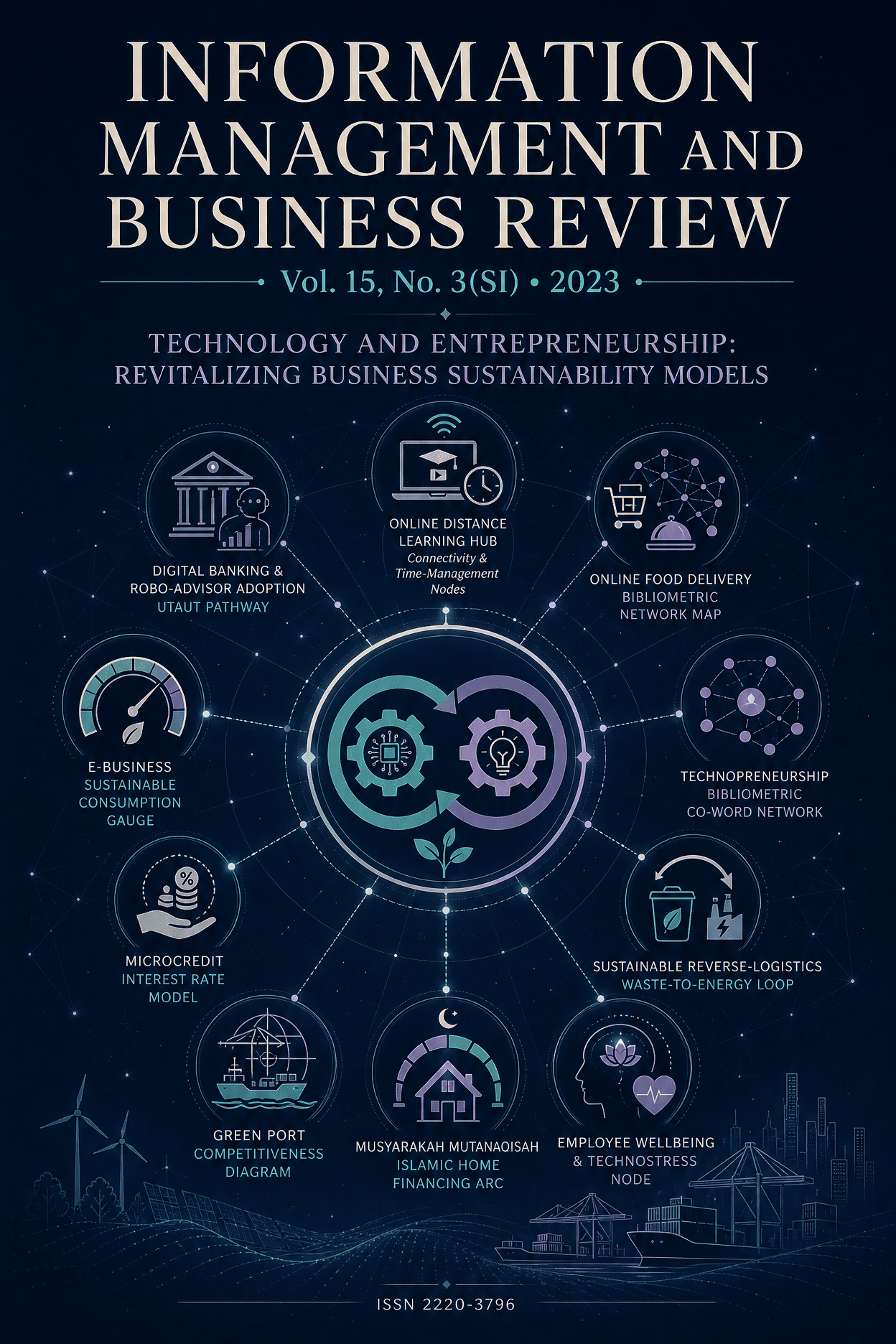
Articles 51–55 of 55

  • Article 51 in this issue

    The Influence of Digital Marketing on Consumer Behavior in the Context of Online Shopping in the Klang Valley, Malaysia

    • Author: Ahmad Zuhairi Zainuddin, Luqman Nulhakim Bin Sulaiman, Muhamad Fadzil Bin Malek, Muhammad Qusyairi Binn Zamri, Norzawani Ibrahim

    The contemporary business landscape has undergone significant transformations, resulting in a highly competitive atmosphere. The onset of the second wave of digitization and technological innovation occurred in the early 2010s, and the COVID-19 pandemic further amplified its momentum. The second wave pertains to digitalizing the industrial sector, encompassing several aspects such as digital manufacturing, data-driven healthcare, intelligent buildings, and smart cities (World Economic Forum, 2021). Digital marketing has emerged as a highly prevalent marketing strategy organizations employ, mainly through social media platforms and email marketing techniques. Social media and email marketing are potent strategies for cultivating consumer engagement. This engagement plays a crucial role in influencing the frequency of customers' intent to make purchases. Furthermore, these marketing methods are characterized by their userfriendly nature and resilience. Digital marketing technologies provide organizations with a convenient means to effectively promote their products and foster customer relationships at a reduced cost, resulting in heightened sales volume. This study investigates the relationship between digital marketing, consumer engagement, and purchase intention within the Klang Valley region. The primary objective is to optimize the utilization of the study findings by obtaining theoretical validation of the relationship between the variables and selecting the most suitable implications that contribute to identifying the influence of digital marketing on consumer engagement and purchase intention.

    Pages 480-489

    PDF - The Influence of Digital Marketing on Consumer Behavior in the Context of Online Shopping in the Klang Valley, Malaysia (opens in a new tab)
  • Article 52 in this issue

    Exploring the Impact of Patriotism, Volunteerism and Perceived Empowerment on Community Engagement in Sports Events

    • Author: Azzura Nordin, Aziz Jamal, Nor Zaihan Mat Hasan Mat Hussin, Mohd Zulkifli Abdullah, Saadiah Juliana Saadun

    This paper examines the role of patriotism, volunteerism, and perceived empowerment in fostering community engagement during sports events. Using purposive sampling, this study employed 174 undergraduate event management students to answer questionnaires that measured patriotism, volunteerism, perceived empowerment, and community engagement. The relationship of studied variables was primarily analyzed using correlational and multivariate regression analyses through structural equation modeling (SEM). The results of the analyses identified patriotism, voluntarism, and perceived empowerment statistically and significantly influenced respondents` community engagement. Patriotism also emerged as a predictor that influenced community engagement the most. The findings underscore the importance of understanding the specific event context in shaping the influence of these factors. The study highlights the significance of community engagement in sports events for sports management research and practice, emphasizing the motives behind voluntary participation and the potential impact on community development and social outcomes.

    Pages 490-496

    PDF - Exploring the Impact of Patriotism, Volunteerism and Perceived Empowerment on Community Engagement in Sports Events (opens in a new tab)
  • Article 53 in this issue

    The Study on the Factors Affecting Employees' Quitting Intention in Malaysian Manufacturing Sector

    • Author: Khairubi Mahmad, Maliza Delima Kamarul Zaman

    To understand how ethical leadership, emotional leadership, and transformational leadership impact employees' intention to quit in the Malaysian manufacturing industry, a study was undertaken. In this study, a quantitative technique was utilized to gather data from a sample of 175 employees selected from industrial enterprises in the Klang Valley, Malaysia by the use of an online questionnaire. As a means of gathering data, a verified questionnaire with pertinent questions for the study was used. The research findings indicated that there were negative relationships between ethical leadership, transformational leadership and emotional leadership with quitting intention. This showed that employees will have less intention to quit with the increase in ethical leadership, emotional leadership as well and transformational leadership. It also led to further understanding that transformational leadership and emotional leadership had significant effects on employees’ intention to quit respectively. These findings were hoped to help organization leaders keep their employees motivated and satisfied with their jobs to make them loyal customers to the company. This study was carried out with employees as the respondents and was set to be in the manufacturing sector in Klang Valley, Malaysia which included all of Selangor's major districts. This was done by choosing samples from different districts that were actively engaged in the manufacturing sector.

    Pages 497-509

    PDF - The Study on the Factors Affecting Employees' Quitting Intention in Malaysian Manufacturing Sector (opens in a new tab)
  • Article 54 in this issue

    The Effect of Organizational Innovation Mediates between Knowledge Management Capabilities and Hotel Performance: A Conceptual Analysis

    • Author: Syed Jamal Abdul Nasir Syed Mohamad, Nor Shahrul Nizam Muhamad Nor, Amily Fikry, Muhammad Ridzuan Abdul Aziz

    The mediation relationship of organizational innovation (OI) between knowledge management capabilities (KMC) and hotel performance (HP) in Malaysia is the focus of this study. According to the World Tourism Organization (2018), around 1.245 billion foreign tourists visited the world in 2016, and the business is expected to generate trillions of dollars in revenue. Unfortunately, this industry has been impacted by the COVID-19 pandemic, which began in early 2020 but has since slowly recovered since 2022 (UNWTO, 2022). To survive in the cut-throat climate, hoteliers in the tourism sector must adopt the prevailing fashion. As a result, hoteliers must equip their staff with the necessary knowledge of infrastructure and processes to handle organizational innovation to ensure they can perform and survive. Nonetheless, a large number of them continue to resist knowledge management adaptation as a creative organization. This initial stage of the conceptual paper is the development of knowledge management, organizational innovation and hotel performance. The data were collected from selected hotels among their top management such as chief executive officers, general managers, managing directors or department managers that represent threestar to five-star hotels in Malaysia by using simple random sampling from the list provided by the Ministry of Tourism, Art and Culture of Malaysia. The result can be expected to assist organizations including hoteliers to sustain competitiveness by having knowledge management capabilities and organizational innovation in the market.

    Pages 510-524

    PDF - The Effect of Organizational Innovation Mediates between Knowledge Management Capabilities and Hotel Performance: A Conceptual Analysis (opens in a new tab)
  • Article 55 in this issue

    Factors Influencing Philanthropic Behavior among Youths in Malaysia

    • Author: Norellani Binti Sukri, Afiza Azura Mohamad Arshad, Chuah Soo Cheng, Zaidi Mohd Aminuddin, Azlin Shafinaz Arshad

    Philanthropy is the desire to promote the well-being of others. It is about looking for and helping the welfare of others, particularly by giving them money for good reasons. Philanthropy is not only confined to the contribution of money, but it involves making efforts for religious purposes and self-satisfaction towards others. The level of charity among Malaysian citizens is alarming in 2015, Malaysia ranked 10th in the World Giving Index but in 2021 the ranking has dropped tremendously to 29th place. This has shown that Malaysians are getting less interested in participating in charitable activities and doing general good deeds. Therefore, there is an urgent need to look broadly at the philanthropic behavior of Malaysians. This research aims to determine the factors influencing philanthropic behavior among youth in Malaysia. For this study, a survey was conducted to the target population which is youth. Data was collected by distributing questionnaires via emails and WhatsApp groups and data was analyzed using SPSS and PLS-SEM. Findings show that religion and altruism are significant to the philanthropic behavior of Malaysian youth. This study has provided valuable insights into youth philanthropy by identifying solutions to further create awareness of philanthropy.

    Pages 525-535

    PDF - Factors Influencing Philanthropic Behavior among Youths in Malaysia (opens in a new tab)