Articles 11–20 of 26

  • Article 11 in this issue

    Investigating Factors Shaping Sunnah-Based Product Consumption among University Students

    • Author: Annurizal Anuar, Abdul Kadir Othman, Siti Noorsuriani Maon, Mohd Zulkifli Abdullah, Mohd Redhuan Dzulkipli, Noor Zaihan Mat Hasan@Mat Hussin

    Health problems have increased because of modern lives, especially in young people because of poor nutrition and improper eating habits. Inspired by Islamic teachings, especially the Quran and the Sunnah of the Prophet Muhammad (PBUH), this study attempts to investigate the factors impacting Sunnah-based product consumption among Muslim college students. Data were gathered by utilizing a correlational research approach and questionnaires given to 476 Muslim university students. According to the study, 96.6% of respondents were aware of Sunnah-based products, and a sizable majority (93.9%) favored them. Childhood exposure to such products (44.3%) points to familial or cultural impacts. The frequency of consumption varied, though, with 41.8% consuming Sunnah-based goods on occasion. Taste concerns were negligible (12.0%) and accessibility issues (23.9%) emerged as the main obstacles to consumption, followed by high pricing (56.5%). Positive sentiments notwithstanding, real-world barriers impede widespread adoption. These results highlight how critical it is to remove obstacles preventing Muslim youth from using Sunnah-based products. Interventions can be designed to encourage healthy eating habits in line with Islamic teachings by knowing the factors influencing their decisions. This will ultimately improve the general health and well-being of Muslim communities.

    Pages 95-103

    PDF - Investigating Factors Shaping Sunnah-Based Product Consumption among University Students (opens in a new tab)
  • Article 12 in this issue

    Forecasting Short-Term FTSE Bursa Malaysia Using WEKA

    • Author: Nurhuda Nizar, Ahmad Danial Zainudin, Ali Albada, Chua Mei Shan

    This study investigates the use of machine learning methods, specifically utilizing the WEKA software, to predict stock prices of the FTSE Bursa Malaysia Kuala Lumpur Composite Index (KLCI). Two algorithms, Sequential Minimal Optimization Regression (SMOreg) and Multilayer perceptron (MLP), were employed for data analysis. Historical data from January 3, 2023, to December 29, 2023, was used to forecast open, high low, and close prices for ten days. Results from both algorithms were compared, with SMOreg proving to be more accurate than MLP for the dataset. However, it's important to note that further exploration of different forecasting algorithms may lead to even more precise results in the future. The findings of this analysis hold significant implications for investors, as they can use the insights gained to inform their investment strategies. By leveraging machine learning techniques like SMOreg within the WEKA framework, investors can potentially make more informed decisions regarding their stock market investments, leading to improved portfolio performance and risk management.

    Pages 104-114

    PDF - Forecasting Short-Term FTSE Bursa Malaysia Using WEKA (opens in a new tab)
  • Article 13 in this issue

    The Effect of False Advertising on Consumer Online Purchase Behavior with the Mediating Effect of e-WOM: Consumers in Malaysia

    • Author: Ahmed Michail Awad Ahmed, Abdul Kadir Bin Othman

    Advertising is one of the main contributors to the rising number of online shoppers worldwide. The use of advertising in this digital era has become a powerful tool for the persuasion of consumers. However, some organizations have adopted false advertising as their marketing strategy. The purpose of this study is to analyze the factors that influence consumers’ online shopping behavior. The study focuses on the three independent constituent factors of false advertising, namely, unethical advertising, misleading information, and deception. The dependent variable is online purchase behavior. A questionnaire was distributed to 588 individuals who shopped once or more from the top e-commerce platforms in Malaysia. The questionnaire underwent validation and reliability assessments, followed by the collection and analysis of responses using SPSS software. The findings indicate that False advertising can have significant effects on consumer online purchase behavior in Malaysia. Through the use of misleading or false information, companies can manipulate consumer perceptions and ultimately influence their buying decisions. This can lead to several negative consequences for consumers, including financial losses, disappointment with purchased products, and erosion of trust in online shopping.

    Pages 115-128

    PDF - The Effect of False Advertising on Consumer Online Purchase Behavior with the Mediating Effect of e-WOM: Consumers in Malaysia (opens in a new tab)
  • Article 14 in this issue

    Islamic Human Resource Management (IHRM) Influence on Employee Turnover Intention in MultiNational Corporations (MNCs) in Malaysia

    • Author: Salmi Bawasa, Abdul Kadir Othman

    This paper investigates the dynamics affecting employees' intentions to leave their jobs in multinational corporations (MNCs) in Malaysia, focusing on the influencing factors of Islamic human resource management (IHRM). The increasing trends of employee turnover intention have significant implications for businesses, as they can impact strategic objectives and plans. The consequences encompass higher expenses, elevated costs for hiring and replacing employees, the need for time-consuming training, disruptions in productivity and supply, and a decrease in morale. To investigate this phenomenon, a positivist research design with a correlational study approach was adopted. The study population consisted of diversified MNCs, with a sample of 277 MNC employees as the unit of analysis. Questionnaires were used as the research instrument. The findings revealed a strong relationship between Islamic recruitment and hiring and employee turnover intention, and between Islamic performance and compensation and employee turnover intention. This study highlights the importance of integrating Islamic human resource management into organizational practices, identifying specific management strategies that can help mitigate and address employee turnover intention.

    Pages 129-137

    PDF - Islamic Human Resource Management (IHRM) Influence on Employee Turnover Intention in MultiNational Corporations (MNCs) in Malaysia (opens in a new tab)
  • Article 15 in this issue

    Developing a Model for Graduate Employability Transfer of Training

    • Author: Nor Intan Adha, Zuhaina Mustapa, Suhaila Mohamed, Jiang Ming Di, Masliza Osman

    The focus of this research at the Talent Enhancement Institution (TEI) is to enhance the effectiveness of transfer of training in Malaysia’s graduate employability programs. This is crucial for shaping the future workforce in accordance with the Malaysian National Higher Education Strategic Plan 2021–2030 policies and the sustainable development goals for quality education. This study provides insight into the influence of trainees' self-efficacy, traits, and training design on the effectiveness of training outcome transformation. Meanwhile, learning culture acts as a moderator between every independent variable and the transfer of training. Using a practical combination of both quantitative input from 125 survey participants and qualitative insights from 25 interviews, our study seeks not only to investigate but also to gain a detailed understanding of the dynamics of knowledge and skill application after training. We will propose solutions to enhance the transfer of training and improve the effectiveness of Talent Enhancement Institution (TEI) programs in enhancing graduate employability in the dynamic global job market.

    Pages 138-152

    PDF - Developing a Model for Graduate Employability Transfer of Training (opens in a new tab)
  • Article 16 in this issue

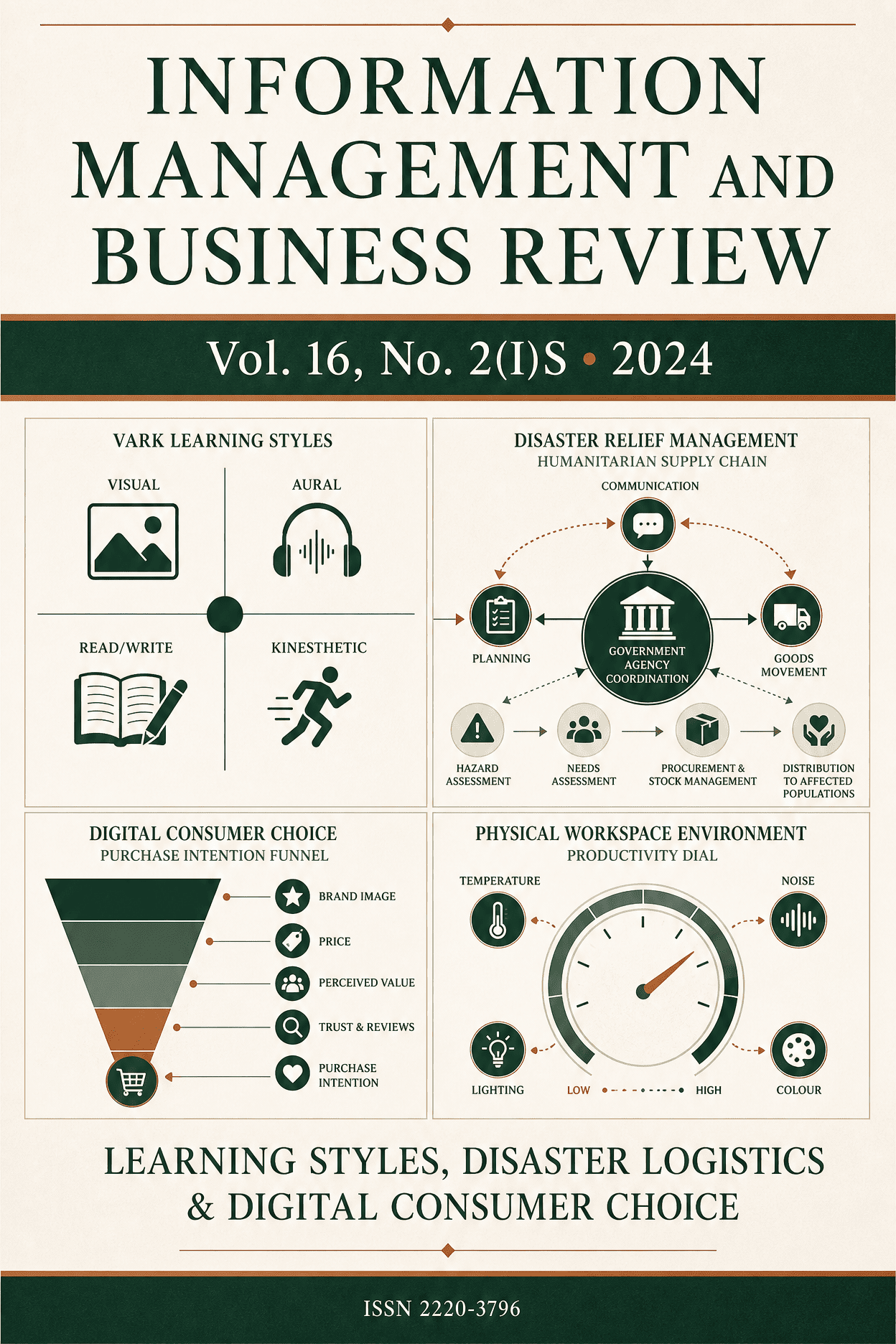
    Optimising Administrative Employees’ Productivity in XYZ District of Sarawak: The Role of Physical Workspace Environments

    • Author: Nurul Masturina Maslan, Azilah Anis, Rafikul Islam

    A pleasant physical working environment is essential to prevent unnecessary stress among administrative employees. This is because administrative employees spend most of their working hours within a building or a physical workspace environment. With these routine tasks and the extensive time spent in the workspace, discomfort can easily arise in their productivity and performance. Therefore, this study aims to identify the impact of the physical workspace environment on administrative employees’ productivity at XYZ district, Sarawak, by employing four dimensions of the physical workspace environment: temperature, noise level, lighting, and color. This study employs a quantitative methodology, and questionnaires were used to collect the data by utilizing the e-survey. The data was gathered from 81 administrative employees via convenience sampling from private and public organizations located in XYZ district, Sarawak, and analyzed using reliability analysis, descriptive analysis, correlation analysis, and multiple regression analysis. The findings indicate that this study’s four dimensions of the physical workspace environment, i.e., temperature, noise level, lighting, and color, have a significant relationship with administrative employees’ productivity in XYZ district, Sarawak. The study concludes that organizations can significantly boost the productivity and performance of administrative employees by optimizing the physical workspace environment. It also suggests that organizations should not only aim to create a conducive workspace but also consider the preferences and well-being of their employees. This research contributes to a better understanding of the environmental factors affecting employee productivity and offers practical insights for organizational improvement in physical workspace design.

    Pages 153-166

    PDF - Optimising Administrative Employees’ Productivity in XYZ District of Sarawak: The Role of Physical Workspace Environments (opens in a new tab)
  • Article 17 in this issue

    The Relationship of Succession Planning, Career Attitude and Job Security with Turnover Intention at Private University in Malaysia

    • Author: Nurul Irdina Fahmi, Idaya Husna Mohd, Nursaadatun Nisak Ahmad, Shereen Noranee, Syarifah Mastura Syed Abu Bakar, Wong Chee Hoo

    Employee turnover has long been acknowledged as a silent threat to any organization. The turnover phenomenon has been a highly pressing concern for private universities’ faculties. Despite the attentiveness and responsiveness of high rates of turnover around the globe, research on the area of turnover or turnover intention, as well as succession planning, career attitude and job security is limited. Past studies have not assessed the scale and nature of the association between these three variables. Thus, this study aims to explore the relationship between succession planning, career attitude and job security toward turnover intention. The study specifically focused on a private university in Malaysia and data was gathered through 148 questionnaire surveys. The conceptual framework developed consisted of dimensions of succession planning, career attitude, job security and turnover intention. A set of three hypotheses was developed that assessed whether there existed a positive or negative relationship between these three variables. For data analysis, the study utilized various numbers of statistical techniques such as exploratory factor analysis, confirmatory factor analysis, and cross-case analysis. The study results indicated that the research model developed was a good predictor of turnover intention and provided general support for all three hypotheses. The study also found that there was a positive relationship between succession planning, career attitude, and job security toward turnover intention. The empirical relationships between variables further proposed that it would be favorable and advantageous to the private university management to recuperate university turnover situations. Further discussions included the research contributions and implications.

    Pages 167-172

    PDF - The Relationship of Succession Planning, Career Attitude and Job Security with Turnover Intention at Private University in Malaysia (opens in a new tab)
  • Article 18 in this issue

    Navigating the Path to Equitable and Sustainable Digital Agriculture among Small Farmers in Malaysia: A Comprehensive Review

    • Author: Omar Abu Hassim, Ismah Osman, Asmah Awal, Fhaisol Mat Amin

    The agriculture sector has transformed with the advent of digital agriculture, smart farming and Agriculture 4.0, yet the social science aspects remain underexplored. This article aims to address this gap by conducting a comprehensive review of 17 studies that focus on the social, economic, and institutional dimensions of precision farming, digital agriculture, smart farming and Agriculture 4.0. The objectives are to explore the dynamics between digital agriculture and farm diversity and to identify emerging concerns related to economics, business, institutions, and ethics. Methodologically, the review synthesizes existing literature on socio-cyber-physical-ecological systems, digital agriculture policy processes, the transition from analog to digital agriculture and the global landscape of digital agriculture development. It adopts a multidisciplinary and transdisciplinary approach to provide a holistic understanding of the topic. The outcomes reveal significant implications for policymakers, farmers, and stakeholders in the agriculture sector. Key findings highlight the necessity of addressing social and economic impacts, such as data privacy, security, and accessibility, and the effects of automation on rural employment and community structures. The review emphasizes the importance of developing institutional and governance frameworks to support digital agriculture practices and tailoring policies to promote sustainable and equitable use of digital technologies. It explores how infrastructure, connectivity and local capacities influence the adoption of digital agriculture technologies. The review advocates for further research on the intersection of digital agriculture with broader societal trends, such as climate change, urbanization, and food system transformations, to develop strategies for sustainable and resilient food systems.

    Pages 173-188

    PDF - Navigating the Path to Equitable and Sustainable Digital Agriculture among Small Farmers in Malaysia: A Comprehensive Review (opens in a new tab)
  • Article 19 in this issue

    E-Wallet Payment Usage Among Young Consumers Using Technology Continuance Theory

    • Author: Mohd Talmizie Amron, Mohammad Amiruddin Mohamad, Nur Hidayah Md Noh

    Technological innovation has paved the way for the widespread adoption of e-wallets in Malaysia. This trend has been bolstered by government initiatives and incentives promoting cashless transactions. The study aims to contribute to the ongoing efforts to encourage cashless transactions and move towards a cashless society in Malaysia and beyond. The study collected data from 443 university students who had used e-wallets for payment transactions. The analysis examined the relationships between key constructs in the Technology Continuance Theory framework. The results revealed that a positive attitude towards e-wallets significantly influences students' intention to continue using them. Additionally, perceived usefulness emerged as a crucial factor influencing students' attitudes and overall satisfaction with e-wallets. However, the study did not find a significant relationship between perceived ease of use and attitude, suggesting that ease of use may not be a primary driver of students' attitudes toward e-wallets. The theoretical implications of this study contribute to a deeper understanding of e-wallet adoption among the younger generation in higher learning institutions and provide valuable insights for the industry players. The practical implications offer guidance to key players in shaping e-wallet applications to meet the specific needs of university students, ultimately encouraging greater adoption and usage. Future research could explore additional variables and employ longitudinal studies for more comprehensive results.

    Pages 189-197

    PDF - E-Wallet Payment Usage Among Young Consumers Using Technology Continuance Theory (opens in a new tab)
  • Article 20 in this issue

    Effectiveness of TikTok Marketing on Students’ Purchase Intention Towards Fashion Products

    • Author: Nurazree Mahmud, A’irine Nasyirah Mohd Lokman, Nurnajwa Khairuddin, Nurul Nabilah Samsul, Siti Nasyitah Norazizan, Sofie Nazeha Saifuddin

    Social media platforms have a significant function in enabling marketers to engage with their audience in the current digital environment. TikTok has gained immense popularity, particularly among Generation Z, and has emerged as an effective marketing instrument. The objective of this study is to investigate the usefulness of TikTok marketing in influencing students' inclination to purchase fashion items. The researchers employed a quantitative methodology to administer a survey utilizing a questionnaire that evaluated three distinct factors, namely promotion, video quality, and time consumption, which have an impact on purchase intentions. This study employed a probability sampling method, namely simple random sampling, to target a group of final-year students. The sample size consisted of 120 respondents. The data were examined via SPSS, highlighting the reliability of both the independent and dependent variables. The study employed analytical approaches, including reliability analysis and multiple regression analysis. Based on the results of this study, two hypotheses, namely promotion and time consumption, were found to be accepted, whereas one hypothesis, video quality, was found to be rejected. This report is an essential resource for online retailers and marketers as the fashion industry goes through a digital transition. It assists them in selecting efficient channels for advertising their fashionable goods. Businesses looking to engage with this group in the ever-changing digital ecosystem may find it helpful to understand how TikTok marketing influences students' purchasing preferences.

    Pages 198-204

    PDF - Effectiveness of TikTok Marketing on Students’ Purchase Intention Towards Fashion Products (opens in a new tab)