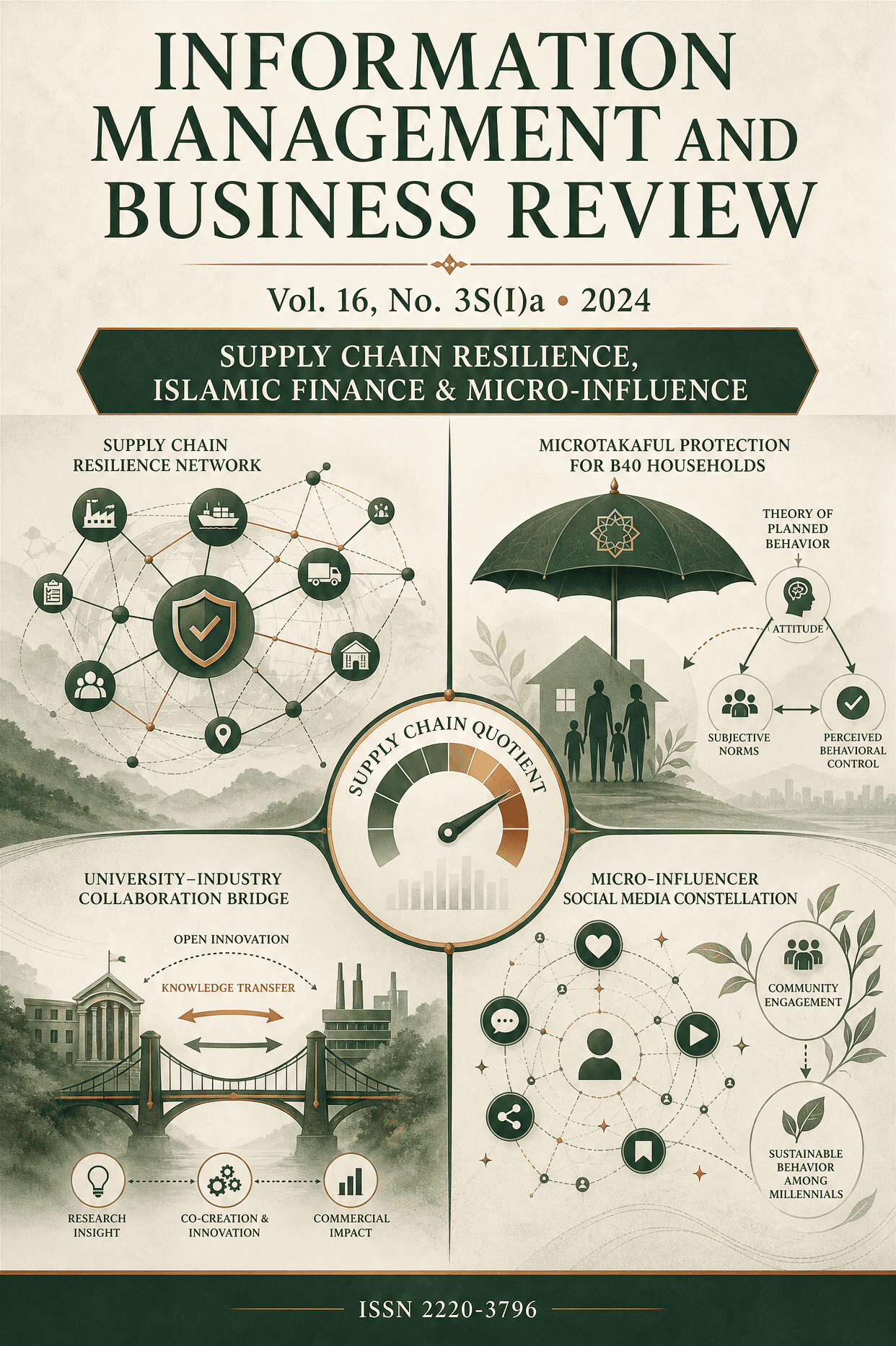
Articles 81–90 of 108

  • Article 81 in this issue

    The Dominance of TikTok in Shaping Online Purchasing Intention

    • Author: Faizah Md Sohid, Faizah Mashahadi, Janiffa Saidon, Nuryusmawati Mohd Yusof, Syed Ashrene Syed Omar, Mohd Fikri Ishak

    In recent years, TikTok has emerged as a dominant force in the realm of social media, captivating millions worldwide with its short-form video content. This paper explores the significant influence of TikTok on consumers' online purchase intentions. Through an examination of relevant literature and empirical studies, the paper elucidates the mechanisms through which TikTok impacts consumer behavior and decision-making processes. It delves into the role of user-generated content, influencer marketing, and algorithmic recommendations in shaping consumer preferences and driving purchase intentions on the platform. Additionally, the paper discusses the unique features of TikTok, such as its immersive and engaging format, personalized content delivery, and seamless integration of e-commerce functionalities, which contribute to its efficacy as a persuasive tool for brands and marketers. Furthermore, the paper highlights the implications of TikTok's dominance for businesses seeking to leverage the platform for marketing purposes and outlines strategies for effectively harnessing its potential to enhance online sales and brand engagement. Overall, this paper sheds light on the transformative influence of TikTok in the digital landscape and underscores its pivotal role in shaping contemporary consumer behavior and purchase intentions.

    Pages 882-891

    PDF - The Dominance of TikTok in Shaping Online Purchasing Intention (opens in a new tab)
  • Article 82 in this issue

    Technological Innovation for Sustainable Supply Chain Management in the Food Industry

    • Author: Fu Rui, Veera Pandiyan Kaliani Sundram

    This study explores the critical role of technological innovations—specifically blockchain, Internet of Things (IoT), and artificial intelligence (AI)—in enhancing sustainable supply chain management within Malaysia's food industry. As the industry faces increasing pressure to adopt sustainable practices due to environmental concerns, regulatory demands, and consumer expectations, these technologies offer significant potential for improving traceability, reducing waste, and optimizing operational efficiency. The research highlights how blockchain enhances transparency and ethical sourcing, IoT enables real-time monitoring to minimize waste, and AI optimizes demand forecasting and inventory management, reducing overproduction and resource waste. However, the study also identifies substantial barriers to the adoption of these technologies, particularly for small and medium-sized enterprises (SMEs). These challenges include high implementation costs, a shortage of skilled labor, and concerns over data security and privacy. To address these issues, the study recommends starting with pilot projects to mitigate risks, investing in continuous workforce training, enhancing data security measures, and leveraging government support and industry collaborations. By overcoming these challenges, Malaysia's food industry can effectively integrate these innovations, leading to more sustainable, efficient, and resilient supply chains. This research underscores the importance of strategic planning and continuous improvement in fully realizing the benefits of technological advancements, thereby positioning Malaysia’s food industry as a leader in sustainable practices within the global market.

    Pages 892-903

    PDF - Technological Innovation for Sustainable Supply Chain Management in the Food Industry (opens in a new tab)
  • Article 83 in this issue

    Factors that Influence Customer Loyalty in Online Banking Among University Students

    • Author: Nor Lela Ahmad, Dayang Nailul Munna Abg Abdullah, Maliza Delima Kamarul Zaman, Nuramyra Natasha Mohamad Helmyan, Nurain Farhah Bahromn, Nur Nazifa Nadhirah Mohd Jamali, Nurul Natasha Norhisham, Syaza Haziqah Romzi, Mohd Wafiq Abdullah

    Banks confronted tough competition in acquiring and maintaining consumers with their e-banking platforms due to the rising rate of use of e-banking systems. Essentially, improving e-banking service quality is seen as the best strategic strategy for increasing client loyalty to the e-banking system. The purpose of this paper was to empirically investigate a comprehensive mechanism for enhancing customer loyalty toward e- banking platforms via e-banking service. Reliability, website design, privacy and security, and customer service and support were the dimensions used. The objectives of this research included exploring relationships between factors such as customer satisfaction regarding online banking, reliability of service, quality and performance, service privacy and security in transactions, website design and its use, and the service and assistance in the usage, and customer loyalty. The respondents were among part 2 to part 5 students from Human Resources Studies in a higher learning institution. The researcher distributed the questionnaire to the respondents through the online method using social media accounts like WhatsApp, Instagram, and Telegram. The findings of the research included that, value and relevance were insights strategies to develop loyalty among student users. This included development and promotions with products like educational loan assistance, scholarship tracking tools, budget budget-friendly debit cards with student-specific features. Rewards, points, and other incentives should be used to make sure that online banking is being used frequently. Plugging the site along with its social features through a community forum made sure the students provided peer-to-peer support in sharing financial tips and experiences.

    Pages 904-917

    PDF - Factors that Influence Customer Loyalty in Online Banking Among University Students (opens in a new tab)
  • Article 84 in this issue

    Unveiling the Keys to Employee Loyalty: Exploring Factors Affecting Employee Retention

    • Author: Wan Aliyah Wan Abd Aziz, Nor Lela Ahmad, Hairunnisa Ma’amor, Ruzita Manshor, Faizah Md. Sohid, Natasha Dzulkalnine, Farahiyah Akmal Mat Nawi, Azzura Nordin

    The issue of employee retention is a crucial factor especially if a company wants to remain relevant in the market. The research analyses how compensation and benefits, training and development, working environment, and reward and recognition impact the retention of employees. This study will employ a quantitative research design that will involve administering questionnaires to employees working in companies around Klang Valley conducted within the context of Malaysia, and it uses a survey approach with participants from various companies. In this study, the concepts of Maslow’s Hierarchy of Needs and Alderfer’s ERG Theory will be used in a bid to determine factors affecting employee retention. The sampling technique to be used is non-probability. Therefore, convenience sampling will be used with a view of identifying participants with rich information on their experience and perceptions towards the objectives of the study on employee retention. The study seeks to establish how these independent variables impact employee retention to enhance understanding of Human Resource Management (HRM) practices. Reliability analysis, descriptive analysis, correlational analysis, and regression analysis will be employed as a measure of the strength and direction of these relationships. It will reveal the most critical antecedents to overall employee retention and provide actionable insights that organizations can implement to improve their practices. Therefore, while filling the gap in the literature and targeting the Malaysian industry, this study aims to enhance understanding of the factors influencing employee retention. Finally, its purpose is to help organizations design proper approaches to retain top talents in the company and make them dedicated to work.

    Pages 918-931

    PDF - Unveiling the Keys to Employee Loyalty: Exploring Factors Affecting Employee Retention (opens in a new tab)
  • Article 85 in this issue

    Focus Group Interview: University-Industrial Collaboration

    • Author: Norfadzilah Abdul Razak, Noor Azlina Mohamed Yunus

    Business innovations can introduce novel and imaginative concepts, particularly within digitalization. Innovations have the potential to stimulate the advancement of enterprises, fostering market expansion, enhancing competitiveness, and optimizing profitability. Nevertheless, the implementation of innovation may be achievable in collaboration. Collaborations and interactions between academia and industrial entities may yield improved outcomes. Nevertheless, the presence of obstacles between academia and industries could harm the long-term viability of commercial innovation. The concerns and challenges faced by local institutions and enterprises in Malaysia are examined within the framework of a case study. Data was obtained from a random sample of Chief Executive Officers (CEOs) across several industries. A focus group was conducted with 15 representatives from Small and Medium Enterprise (SME) companies and one moderator to lead the discussion. The findings from the focus group have been transcribed and analyzed based on their sharing. The rationale for focusing on CEOs was their role as critical decision-makers responsible for driving corporate innovations. The collection of perspectives from academia and industries was facilitated through face-to-face interviews. The study provided suggestions for potential avenues of future investigation.

    Pages 932-938

    PDF - Focus Group Interview: University-Industrial Collaboration (opens in a new tab)
  • Article 86 in this issue

    Influence of Corporate Information Transparency on Foreign Institutional Investors' Shareholding Behavior: Evidence from Public Listed Companies in China

    • Author: Yang Yaojing, Nor Farradila Abdul Aziz, Maryam Jameelah Mohd Hashim

    In 2003, China implemented the Qualified Foreign Institutional Investor (QFII) system, which has garnered considerable interest from international institutional investors in the mainland market. As global investors, QFIIs depend significantly on precise, thorough information to bolster their investing criteria. Consequently, the transparency of corporate information becomes a crucial factor for QFIIs, as they prioritize well-disclosed information in their investment strategies. However, due to the relatively late development of the Chinese market, an imbalanced structure of listed companies, and information asymmetry, the information disclosure of listed companies has been subject to certain degrees of distortion. This can hinder the effectiveness of the QFII system. Therefore, to better facilitate the development of China's securities market and to help QFIIs fully realize their advanced value investment strategies, this paper aims to study the impact of corporate information transparency on the stockholding behavior of foreign institutional investors. This paper begins by reviewing the literature on the factors influencing institutional investor holdings, corporate transparency, and the characteristics of foreign institutional investors' stockholding. It then defines the concepts of corporate information transparency and foreign institutional investors, analyzes the current state of information transparency in Chinese listed companies, and examines the development of the QFII system in China. The theoretical framework explores the mechanisms through which corporate information transparency influences the stockholding behavior of foreign institutional investors. In the empirical analysis, the paper plans to measure the information transparency of listed companies from three perspectives: earnings quality, information ratings by the Shenzhen Stock Exchange, and the number of analyst followings, to investigate how corporate information transparency influences QFII stockholding behavior.

    Pages 939-953

    PDF - Influence of Corporate Information Transparency on Foreign Institutional Investors' Shareholding Behavior: Evidence from Public Listed Companies in China (opens in a new tab)
  • Article 87 in this issue

    Multivariate Regression Analysis of the Impact of Open Market Share Repurchase Activity on the Malaysian Market

    • Author: Sohail Ahmed

    This research thesis revolves around the need to understand the relationship between share repurchases and the share price behavior of companies listed on Bursa Malaysia on a more recent basis given the economic stability in Malaysia and throughout the world from 2017 to 2021. It started in the West and reached maturity in the 1980s in the United States, but it only began in Malaysia in the 1990s. The studies of share repurchase are still considered an infant in Malaysia as in other countries throughout the world, companies pursue share repurchases for several reasons mainly to signal undervaluation, reward shareholders, defend against the takeover, utilize financial resources efficiently, and many more motives that are interesting for researchers to look at. Unlike other studies that look at announcement dates, since an announcement does not mean the companies will implement the transactions, this research is important since it looks at and analyzes the actual effective repurchase day done by established firms which is are most crucial aspect in analyzing the consequences and the results are that it shows positive abnormal mean returns for most of the companies. Event study methodology was used since this is the best empirical research method and as empirical evidence to analyze abnormal returns from all the other studies. The days observed are 120 days before and after the announcement. Returns for the estimation window, event window (repurchase day), and post-event window were analyzed to see the effects of price movement on repurchase activities at Bursa Malaysia (BSKL).

    Pages 954-962

    PDF - Multivariate Regression Analysis of the Impact of Open Market Share Repurchase Activity on the Malaysian Market (opens in a new tab)
  • Article 88 in this issue

    The Impact of Restaurant’s Online Food Delivery (OFD) Service Quality on Customers’ Repurchase Intention: A Conceptual Framework

    • Author: Noor Rita Mohamad Khan, Muhammad Azman Ibrahim, Rafiatul Adlin Mohd Ruslan, Nor Harlina Abd Hamid, Mohamad Fariz Abdullah

    The outbreak of the COVID-19 pandemic in 2020 had a profound impact on the food service industry, forcing many restaurants and eateries to pivot towards online food delivery (OFD) services to survive. This shift, driven by restrictions on dining-in, has persisted even as dine-in services resumed, positioning OFD as an integral part of restaurant operations. This paper explores the impact of service quality in OFD, proposing a conceptual framework that links service quality dimensions—such as delivery speed, order accuracy, customer service, and platform usability—to the customer’s repurchase intention of food from the restaurant via its OFD services. By addressing these dimensions, restaurants can enhance customer satisfaction, leading to improved financial outcomes. This study aims to provide actionable insights for restaurant operators and contribute to the existing literature on service quality within the OFD sector.

    Pages 963-971

    PDF - The Impact of Restaurant’s Online Food Delivery (OFD) Service Quality on Customers’ Repurchase Intention: A Conceptual Framework (opens in a new tab)
  • Article 89 in this issue

    Understanding the Decision to Purchase Health Insurance Among Academicians

    • Author: Afiza Azura Mohamad Arshad, Azitadoly Mohd Arifin, Soo-Cheng Chuah

    This study investigates various factors influencing the decision of academicians in Malaysia to purchase health insurance. Health insurance is a policy that gives coverage for medical expenses and hospitalization. In Malaysia, health policy is commonly known as medical policy and the term medical card is broadly used to represent health policy and the benefits available under the policy. Through qualitative interviews with six faculty members, the research uncovers the complexities of the decision-making process. The findings reveal that personal experiences, cultural values, social influences, and financial considerations significantly shape these decisions. However, the study's small sample size and regional specificity limit the generalizability of the results. Future research should address these limitations by incorporating a larger and more diverse sample to enhance the external validity of the findings. Such an approach would provide a more comprehensive understanding of the factors influencing health insurance decisions and inform policy interventions aimed at improving healthcare accessibility and affordability.

    Pages 972-978

    PDF - Understanding the Decision to Purchase Health Insurance Among Academicians (opens in a new tab)
  • Article 90 in this issue

    Macroeconomic Forces Affecting Islamic Performance Indices

    • Author: Zainora Ab Wahid, Norliza Che Yahya, Siti Norbaya Mohd Rashid, Muhammad Azizi Karim, Amireza Mohd Khalid

    This study aims to investigate the macroeconomic factors that impact the performance of Malaysia's Islamic stock market. This study looks at six independent variables that affect the performance of the Islamic stock market in Malaysia: the world oil price, inflation rate, Islamic interbank rate, money supply (M2), industrial activity index, inflation rate, Islamic interbank rate, exchange rate, and world oil price. The Department of Statistics Malaysia (DOSM), Bursa Malaysia, Bank Negara Malaysia, and Eikon Thomson Reuters were among the secondary data sources used in this study's quantitative data gathering methodology. The research was carried out over four years (2019–2023) using monthly data. A theoretical model was created to investigate the suggested relationship after it was analyzed using the E-views software. The success of the Islamic stock market was found to be significantly correlated with the inflation rate, money supply, Islamic interbank rate, and exchange rate. These determinants are exerting a direct influence on the Islamic stock market in Malaysia, particularly in its macroeconomic aspects. The present study aims to enhance comprehension regarding the possible effects of different elements on how well the Islamic stock market performs. Different results could come from more research into the various elements affecting the Islamic stock market's performance.

    Pages 979-990

    PDF - Macroeconomic Forces Affecting Islamic Performance Indices (opens in a new tab)