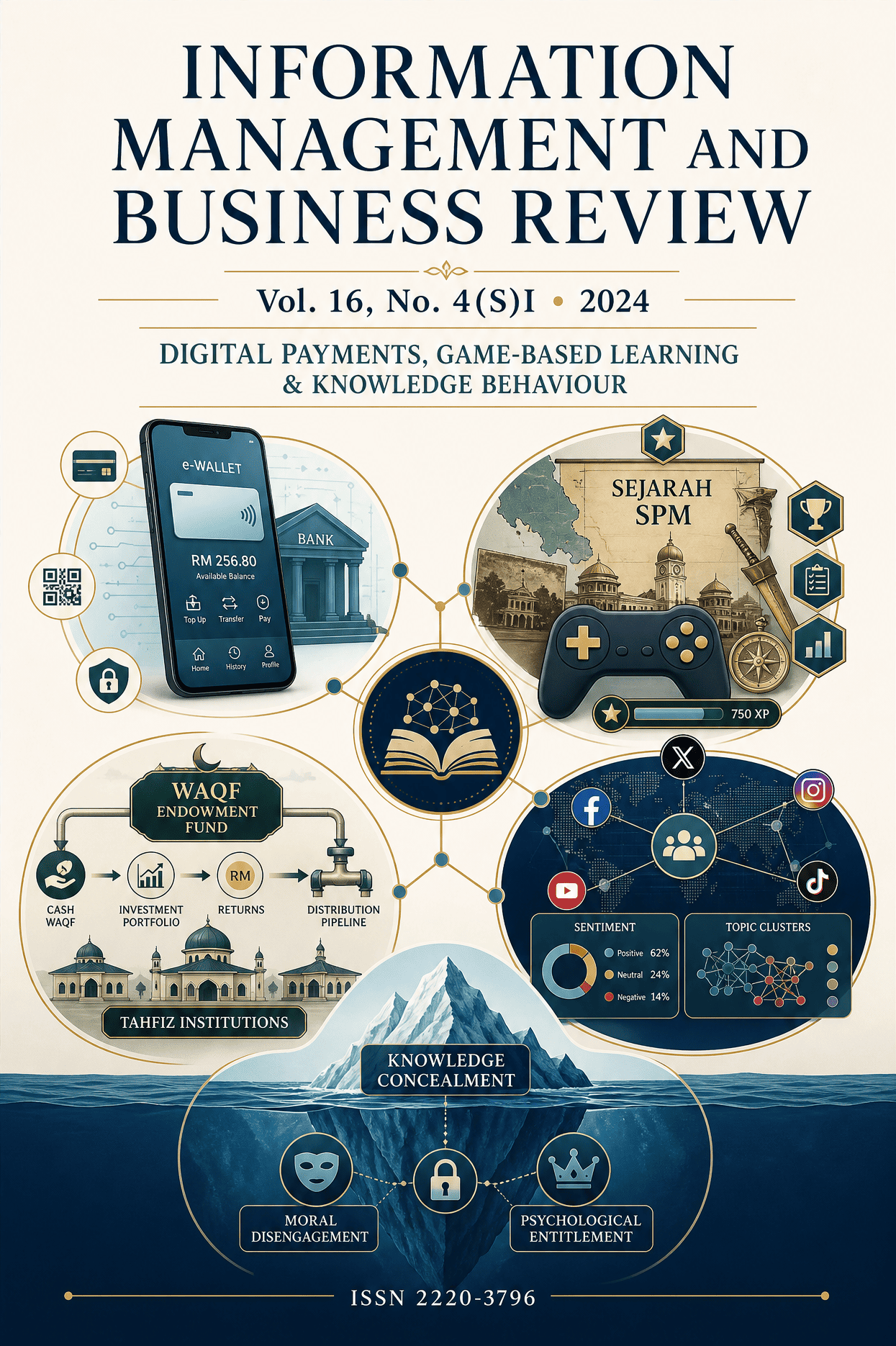
Articles 41–45 of 45

  • Article 41 in this issue

    Smart Farming: Challenges and Adoption Factors among Paddy Farmers in IADA Barat Laut, Selangor

    • Author: Abdul Rahman Saili, Nur Badriyah Kamarul Zaman, Wan Noranida Wan Mohd Noor, Fazleen Abdul Fatah, Farah Adila Abdullah

    Enhancing farm production through smart farming technology is crucial for addressing the challenges of achieving food security and improving the well-being of farmers. Aligned with Sustainable Development Goal 2 (SDG2), which is intended to tackle food insecurity and malnutrition while improving livelihood, smart farming integrates technologies such as IoT, drones, and artificial intelligence into agricultural practices. This innovation optimizes input like water, fertilizer, and pesticide, reduces operation costs, and increases productivity and profits. Food security in Malaysia is measured based on the adequacy of the population's domestic rice supply. Smart farming offers a transformative approach to modern agriculture, focusing on increasing value while reducing costs. Therefore, this study aims to explore challenges and adoption factors among paddy farmers in Barat Laut Selangor, under the administration of the Integrated Agriculture Development Area (IADA). An exploratory qualitative study involved the interview approach with selected rice farmers who applied smart farming as suggested by IADA. The thematic analysis was used to understand the factors that contribute to the adoption of smart farming among rice farmers and its challenges. This research is critical, given Malaysia is moving towards a high-income country, where sustainability becomes the main agenda in any sector specifically agriculture; and the country has acknowledged the importance of food security assurance. By identifying the challenges and adoption factors, this study aims to provide actionable insights to support sustainable agricultural practices and strengthen Malaysia's food security framework.

    Pages 394-400

    PDF - Smart Farming: Challenges and Adoption Factors among Paddy Farmers in IADA Barat Laut, Selangor (opens in a new tab)
  • Article 42 in this issue

    The Consequences of Emotional Intelligence on Various Organizational Outcomes

    • Author: Noorzalyla Mokhtar, Muna Kameelah Sauid, Nurul Ain Mustakim, Ramesh A/L Krishnan

    Research has consistently shown that emotional intelligence (EI) is positively correlated with various organizational outcomes. EI incorporates one's ability to recognize, express, understand, and manage their own emotions and the emotions of others. Studies have shown that employees with high EI can successfully steer the challenges and dynamics of the workplace; in achieving both personal and organizational outcomes. There are various organizational outcomes associated with emotional intelligence that have been extensively studied across many fields. EI has demonstrated a positive correlation with organizational citizenship behavior, job performance, job satisfaction and organizational commitment. Conversely, various studies found EI to have a negative relationship with job stress. This review paper focuses on four important consequences of organizational outcomes namely organizational commitment, organizational citizenship behavior, job satisfaction and job stress. In conclusion, a wide range of disciplines have extensively studied EI as a predictor of many organisational outcomes, including work satisfaction, organisation commitment, and citizenship behaviour. Conversely, EI are found to negatively correlated with job stress in which the higher EI that employee possessed, the less stress they have towards job. In conclusion, EI are also essential for keeping a motivated and productive employee, which eventually benefits the company as a whole.

    Pages 401-408

    PDF - The Consequences of Emotional Intelligence on Various Organizational Outcomes (opens in a new tab)
  • Article 43 in this issue

    The Influence of Spiritual Intelligence on Drug Abuse Tendencies among Residents of Rehabilitation Centres

    • Author: Siti Haziqah Shaban, Aimi Khairunnisa Abdul Karim, Suzyliana Mamat, Norhasima Abdullah, Atini Alias, Ahmad Fuad Daud

    This study focuses on the spiritual intelligence towards drug abuse tendencies among residents of rehabilitation centres in the Alor Gajah district, Melaka. This survey study was conducted with 113 respondents. The study findings were obtained by distributing the Spiritual Intelligence Questionnaire (SIQ) and the Drug Abuse Screening Test 20 (DAST 20). The data was analysed using the Statistical Package for Social Science (SPSS) version 27. The results showed that there was no significant association between spiritual intelligence and drug abuse (r = .003, k >.05). The data correspondingly indicate that there is no difference in spiritual intelligence across age groups [F (2,110) = 1.353, p > .05]. There is also no difference in drug abuse across age groups [F (2,110) = .904, p > .05]. This study is expected to provide useful insights for the government and the general public in identifying drug-related tendencies in Malaysia.

    Pages 409-416

    PDF - The Influence of Spiritual Intelligence on Drug Abuse Tendencies among Residents of Rehabilitation Centres (opens in a new tab)
  • Article 44 in this issue

    An Empirical Study on Customer Retention: A Case Study of Melaka Tourism Industry

    • Author: Nurul Azlinda Chek Talib, Noorain Mohd Nordin, Siti Nurul Aini Mohd Rodzi, Izzatul Anis Zamri

    Customer retention has been emphasized as a significant subject of study in the competitive landscape of tourism destinations. Melaka is among the most frequented sites in Malaysia by both local and foreign tourists. It features a combination of heritage attractions that reflect its designation as a World Heritage Site by UNESCO. This study examines the determinants of customer retention in Melaka empirically. Questionnaires were employed to gather pertinent information from the tourists to know the factors affecting their repeat visitation to Melaka. The objective of the study is to examine the relationship between Destination Attributes, Motive, Cost, and Promotion Strategy related to customer retention in Melaka. The results indicate that Destination Attributes, Motive, and Cost have a positive relationship to customer retention meanwhile Promotion strategy was not related to customer retention empirically. The findings of this study suggested that "cost" was the primary factor influencing customer retention in Melaka. In conclusion, first-time and returning tourists possess distinct expectations yet exhibit comparable pleasure about the aspects of heritage attractions in the Heritage City of Melaka. Future researchers are advised to explore additional factors such as service quality and attraction management to increase the scope of the study. Expanding the sample size would also provide more robust insights, allowing for a broader generalization of findings. By refining the research design, future studies can contribute to a deeper understanding of customer retention in the tourism sector.

    Pages 417-425

    PDF - An Empirical Study on Customer Retention: A Case Study of Melaka Tourism Industry (opens in a new tab)
  • Article 45 in this issue

    Ontology of Protection Motivation Theory on Digital Risk–A Systematic Literature Review

    • Author: Khairunnisa Binti Yussof, Noraznira Abd Razak, Siti Musliha Binti Mohd Idris, Norfaezah Binti Mohd Shahren

    The world of technology is advancing at a breakneck pace. There is no doubt that the convenience of this technology simplifies and expedites everything. The services made available with digitization technology are vast to start with, such as government services, online sales, e-learning, e-banking and many more. Among the areas of importance that shall be highlighted via this article would be any routines involving digital payments. The availability of digital payments facilitates the buying process, business transactions, and bill payments, among other things. Risks related to digital payment usage shall be accelerated if individuals lack experience, disclosure, and much more information related to the procedure of digital payments itself. Not to mention, the risks of cyber security hacking which also on the rise courtesy of the increasing usage of digitalized technology per se. As a result, risks that occur will negatively affect the public's perception, trust and confidence. Simultaneously, this will impact the economic environment, business, and society. As a result, precautionary behavior among customers shall be studied rather than technology acceptance. The protection motivation theory (PMT) shall be adopted for this study since it is well-suited to identifying users' adaptive behavior towards the usage of technology as well as determining whether or not they are aware of the risks associated with the relevant technology involved. The study uses the method of Systematic Literature Review using 11 extant studies to evaluate the protection behavior of digital payment risk.

    Pages 426-432

    PDF - Ontology of Protection Motivation Theory on Digital Risk–A Systematic Literature Review (opens in a new tab)