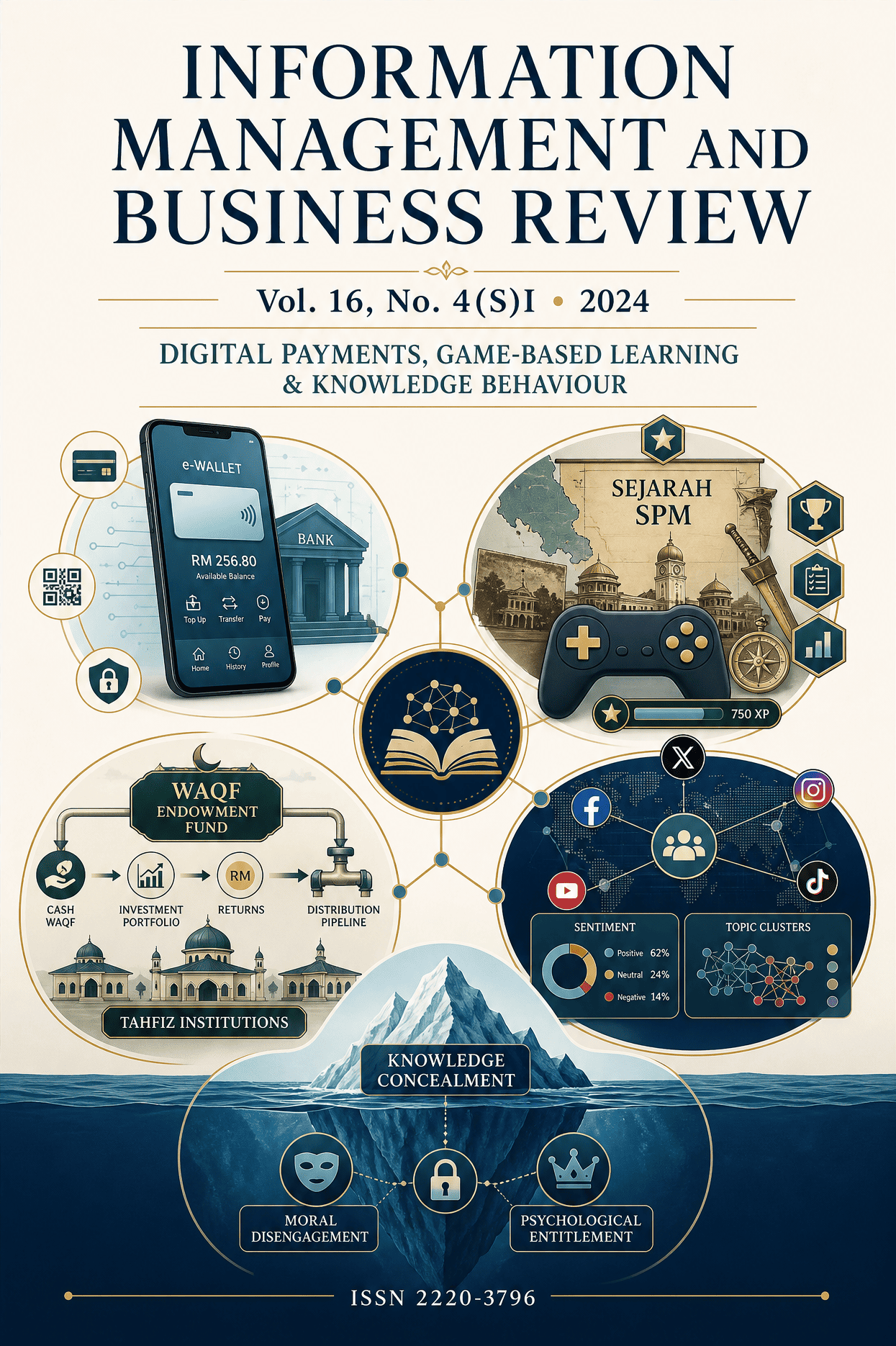
Articles 31–40 of 45

  • Article 31 in this issue

    Zakat Distribution in Healthcare Services: Proposed Model For Zakat Beneficiaries (Asnaf) in Malaysia

    • Author: Masniza Suhana Mohd Alias, Nur Syakirah Zakaria, Fareesha Lyana Khair-UnNizam, Nor Adriana Sahira Noorman Shahri, Puteri Syairahdina Megat Ramli, A’ieshah Abdullah Sani

    Recently, the cost of medical care and treatments has been increasing yearly, putting pressure on the patient, especially the poor and needy (asnaf). The availability of zakat fund provided to patients who cannot afford to pay their medical bills is minimal and the impact of zakat fund on the healthcare industry has not yet been fully acknowledged. Hence, this paper aims to discuss the role of the Zakat fund in providing healthcare services to Zakat beneficiaries and propose a Zakat distribution model as financial assistance in the healthcare services for Asnaf in Malaysia. To address the underlying problems and maximize the application of zakat funds in the healthcare industry, zakat institutions must be managed efficiently. The proposed model holds significance in improving zakat beneficiaries' access to healthcare services and could enhance the quality of life for Asnaf toward better well-being in Muslim society. Since this is a conceptual study only, no data is collected in this study. However, future research is required to verify the proposed model that could assist the zakat institutions in Malaysia to adopt alternative techniques in their zakat collection and distribution to be channeled in the healthcare sector.

    Pages 280-287

    PDF - Zakat Distribution in Healthcare Services: Proposed Model For Zakat Beneficiaries (Asnaf) in Malaysia (opens in a new tab)
  • Article 32 in this issue

    Motivation in Game-Based Learning: A Study on Technical Analysis Education

    • Author: Amirudin Mohd Nor

    Game-based learning is one of the current themes of the 21st century associated with digital natives. Nevertheless, most university educators do not routinely use gamification and game-based learning. This paper tries to link teaching innovation and game-based learning methodology via a game-based learning innovation in a non-game learning environment. This paper explores the students’ motivation for using educational games as their learning medium. A survey on technical analysis students was undertaken specifically focusing on motivation factors as an initial study before proceeding further with full-scale research on game-based learning. This paper is one of the few papers that study game-based learning in finance, specifically the subject of technical analysis. The results indicate that the students have high motivation in game-based related activities and are very interested in using games for learning in the future. Future research can focus on expanding the study to explore other dimensions of the perception of technical analysis students on game-based learning methodology. The outcome of this study will assist educators in the field of finance to understand their students to better serve them specifically in game-based learning matters.

    Pages 288-294

    PDF - Motivation in Game-Based Learning: A Study on Technical Analysis Education (opens in a new tab)
  • Article 33 in this issue

    Bibliometric Analysis on Stimulus-Organism-Response Framework in the Area of E-Commerce and Social Commerce

    • Author: Nur Hazwani Binti Mohamad Roseli, Noor Rafhati Romaiha, Nurul Ain Mustakim, Muna Kameelah Sauid

    This study aims to identify the trends of the publications and research topics. The areas covered are in the field of e-commerce and social commerce that use stimulus-organism-response as the framework. The study was conducted using bibliometric analysis and VOSviewer to visually represent the findings. Scopus was the database for the research and related keywords were constructed based on the study area. 267 publications from 2008 until 2024 were examined. The results revealed that the number of publications is increasing from year to year and the research topics were varied but still within the study area. The research gap between the topics was also identified in this study.

    Pages 295-303

    PDF - Bibliometric Analysis on Stimulus-Organism-Response Framework in the Area of E-Commerce and Social Commerce (opens in a new tab)
  • Article 34 in this issue

    Understanding the Knowledge Concealment Predictors: A Proposed Framework for Knowledge Practitioners in Malaysia

    • Author: Suhaila Osman, Norhayati Hussin, Mohd Sazili Shahibi, Nurul Syfa’ Mohd Tokiran, Zainal Abiddin Morshidi

    This paper explores the knowledge concealment (KC) predictors among knowledge practitioners in Malaysia. It highlights that knowledge concealment (KC) is widely recognized as having a detrimental impact on individuals and organizations. Moreover, KC poses a significant challenge for organizations that are striving to enhance their knowledge management initiatives due to the difficulty in recognizing the existence of the information and the uncertain nature of its impacts. In addition, the prevalence of employees concealing their knowledge and expertise despite the organization's efforts to cultivate a culture of knowledge sharing. Thus, the act of concealing knowledge in an organization has an impact on the Sustainable Development Plan 9 (SDGs), which focuses on industry, innovation, and infrastructure, the Sustainable Development Plan 8 (SDGs), which targets decent work and economic growth to accelerate human capital development for an advanced nation, and the Twelfth Malaysia Plan (2021–2025), which emphasizes human capital through training and education. Therefore, it is crucial to study these predictors as they facilitate the prompt execution of proactive strategies to mitigate KC among knowledge practitioners. This study additionally proposes a novel conceptual framework that explores the relationship among variables, namely the lack of rewards in knowledge sharing, moral disengagement, internal competition, and psychological entitlement with a specific focus on knowledge concealment (KC). This framework presents significant potential for facilitating future research endeavors undertaken by other scholars.

    Pages 304-317

    PDF - Understanding the Knowledge Concealment Predictors: A Proposed Framework for Knowledge Practitioners in Malaysia (opens in a new tab)
  • Article 35 in this issue

    Digital Culture in Information Science Studies: A Systematic Literature Review

    • Author: Nurul Syfa’ Mohd Tokiran, Norhayati Hussin, Mohd Sazili Shahibi, Suhaila Osman, Zainal Abiddin Morshidi

    This paper aims to provide a systematic literature review covering the field of digital culture in the information science study. Digital culture studies have been used in various fields, including but not limited to humanities, education, information technologies, human resources, and counseling. However, the amount of research that discusses the digital culture in information science study remains limited. This paper will provide a comprehensive insight into the studies that have been conducted related to digital culture based on various publications that have been deposited in the selected databases. Based on findings, previous scholars define the concept of digital culture as associated with people as well as technology. The behavior of people interacting, behaving, thinking, and communicating as human beings will create the digital culture environment within current communication settings. Besides that, the development of digital culture research began within the 21st century when the digital and industrial revolutions were introduced. The findings also present the limited number of digital culture research trends within information science. Thus, it is significantly important to explore digital culture research, particularly within information science studies. The information provided in this current study will be greatly beneficial to the research community to discover which database is the most relevant to digital culture studies. This will further assist the researchers to select and target the highindexed journals in the respective databases.

    Pages 318-329

    PDF - Digital Culture in Information Science Studies: A Systematic Literature Review (opens in a new tab)
  • Article 36 in this issue

    Exploring Entrepreneur Intention in the Mushroom Industry with Government Support in Malaysia

    • Author: Zulkefli Muhamad Hanapiyah, Ahmad Syahmi Ahmad Fadzil, Nur Fatihah Shaari, Hamdan Sulaiman, Salwa Adam, Aida Nur Mohd Khodri

    The mushroom industry in Malaysia is experiencing significant growth due to its high return value and low production costs. The Malaysian government has implemented initiatives to encourage entrepreneurial activities. However, the effectiveness of these initiatives in influencing entrepreneurial intention remains to be determined. This study investigates the relationship between entrepreneurial intention in the Malaysian mushroom industry and the moderating effect of government support, drawing insights from the interplay between entrepreneurial self-efficacy, intention, and external support mechanisms. Numerous factors influence entrepreneurship intentions in the mushroom industry. Entrepreneurial self-efficacy plays a crucial role in shaping entrepreneurial intentions and behaviors, and individuals with high self-efficacy are more likely to perceive themselves as capable of successfully starting and running a new business. Government support can provide funding, tax advantages, subsidies, skills development, and advice services and create enabling environments for entrepreneurial efforts. The literature on government support and its impact on entrepreneurship intention reveals gaps that need further exploration. The theory of Planned Behavior (TPB) offers a comprehensive framework for understanding how entrepreneurship education influences self-efficacy, attitudes, and intentions. This study examines the capacity of government assistance to impact entrepreneurial intention in the Malaysian mushroom business, providing vital knowledge on how to promote a more robust environment for sustainable mushroom production. Additionally, this research aims to bridge the gap by investigating how government support moderates the relationship between entrepreneurial self-efficacy and intention in the Malaysian mushroom industry, offering valuable conceptual insights to policymakers for fostering a sustainable mushroom production sector.

    Pages 330-339

    PDF - Exploring Entrepreneur Intention in the Mushroom Industry with Government Support in Malaysia (opens in a new tab)
  • Article 37 in this issue

    Empowering Agribusiness: Crowdfunding as a Catalyst for Young Agri-Entrepreneurs in Malaysia

    • Author: Nurul Shafika Zul Razali, Selvakkumar K N Vaiappuri, Noor Zubaidah Abdul Rahman, Aroop Mukherjee

    This study investigates the determinants of crowdfunding adoption among young agribusiness entrepreneurs in Malaysia, particularly those aged 18 to 40. As an alternative to conventional financing options, crowdfunding offers an accessible funding mechanism for entrepreneurs who face challenges securing traditional loans due to limited collateral, high risk, and stringent banking requirements. The study identifies and examines five key factors influencing crowdfunding participation: trust issues, limited financial resources, entrepreneurial attitudes, banking constraints, and awareness of crowdfunding. Data were collected through a survey of 117 young agribusiness entrepreneurs and analyzed using descriptive statistics, Exploratory Factor Analysis (EFA), and Pearson correlation analysis. Results indicate that while crowdfunding awareness positively correlates with the desire to participate, significant barriers persist in terms of trust and financial limitations. These findings contribute to the growing body of knowledge on alternative financing in Malaysia's agricultural sector, providing actionable insights for policymakers and practitioners. The study concludes that targeted interventions are necessary to build trust, improve financial literacy, and promote crowdfunding as a viable tool for economic development within the agribusiness sector.

    Pages 340-351

    PDF - Empowering Agribusiness: Crowdfunding as a Catalyst for Young Agri-Entrepreneurs in Malaysia (opens in a new tab)
  • Article 38 in this issue

    Evolutionary Overview of Tawarruq Based on Bibliometric Analysis from 2012 to 2024

    • Author: Salbiah Nur Shahrul Azmi, Noradilah Abdul Hadi, Mohd Nazri Mohd Noor

    Islamic financing in Malaysia is helping the Islamic banking sector expand quicker than conventional lending. This expansion is driven primarily by tawarruq -based financing. Surprisingly, since tawarruq is the most common contract especially when it comes to financing products, the proposal in Bank Negara Malaysia’s (BNM) Financial Sector Blueprint 2022 – 2026 to review its use must be taken seriously to target broader adoption of sustainable financing. This study uses bibliometric analysis based on the Scopus and Science Direct databases to capture the research landscape relevant to tawarruq since no large-scale studies have been performed from 2012 until 2024. The application of tawarruq on financing products is also considered to assess the importance and relevance of studies in the area of tawarruq. The results manage to unpack the evolutionary nuances of tawarruq while shedding light on the emerging regions of tawarruq . As a whole, this paper should be a useful resource for gaining insight and identifying the patterns, trends and impact of tawarruq within the Islamic finance industry.

    Pages 352-369

    PDF - Evolutionary Overview of Tawarruq Based on Bibliometric Analysis from 2012 to 2024 (opens in a new tab)
  • Article 39 in this issue

    Understanding The Influence of E-Leadership on Trainee and E-Learning Effectiveness among Executives in Malaysia

    • Author: Raja Amir Ashraf Raja Zainalabidin, Ahmad Syahmi Ahmad Fadzil, Muhammad Faizal Ramli, Nur Ain Syazmeen Ahmad Zaki

    electronic leadership (e-leadership) is crucial for the success of e-learning initiatives, particularly in executive education. E-leaders must navigate digital technologies, foster trust and collaboration, and inspire their teams to succeed in a technology-driven workplace. In Malaysia, the National Policy on e-Learning aims to enhance the quality and accessibility of e-learning in higher education institutions. However, many failure rates of e-learning programs are due to the need for more effective e-leadership skills and execution by trainers. The study used snowball sampling to collect data from a target population that needed help to identify. This method involves starting with a few known participants and referring others to meet the study criteria. This approach helps reach hidden or hard-to-reach populations. An online questionnaire was distributed to executives in Malaysia, and data was collected from 191 participants. Structural equation modeling using SmartPLS Version 4 was used to analyze the relationships. The study examined the relationships between Computer Self-Efficacy (CSE), E-Leadership (EL), Motivation to Learn (MTL), and E-learning Effectiveness (EE). Results showed that CSE, EL, and MTL significantly influence EE. However, the model had limited predictive power for CSE, EL, and MTL. Institutions can improve e-learning effectiveness by offering pre-emptive training programs, boosting motivation to learn through engaging course materials, and strengthening e-leadership knowledge. Future research should explore additional variables, consider organizational context, and examine potential interaction effects. Developing strategies and interventions based on findings can contribute to improving E-learning experiences in various educational settings.

    Pages 370-381

    PDF - Understanding The Influence of E-Leadership on Trainee and E-Learning Effectiveness among Executives in Malaysia (opens in a new tab)
  • Article 40 in this issue

    The Impact of Job Satisfaction and Organizational Commitment on Employee Turnover Intentions in the Malaysian Manufacturing Industry

    • Author: Hou Chanyi, Zulkefli Muhamad Hanapiyah

    One of the primary resources of an organization that can provide a worthy contribution to the achievement of the organization’s strategies is human resources. A significant problem in most manufacturing organizations is the desire to leave. Given this, the objective of this study will be to assess and measure the impact of job satisfaction and organizational commitment on employee turnover intention in the manufacturing sector. Of 200 questionnaires, 179 were filled out by a manufacturing organization (response rate = 89.5%). Demographic profiles were described using frequency count and percentages of the respondents. Descriptive and inferential statistics were adopted for the analysis of specific data gathered. Regarding inferential statistics, the measure used in the study was the Pearson Correlation Coefficient, which was used to determine the strength of the relationship between dependent and independent variables. According to the results of the analysis, it can be concluded that the independent variable job satisfaction is related to the sub-variable satisfaction with compensation and satisfaction with career development opportunities, which has a low negative correlation with employees' turnover intention. However, no significant relation was found between organizational commitment and the turnover intention of employees within the organization. This research offers valuable information to organizations within the manufacturing industry regarding the factors influencing turnover intention, including job satisfaction and organizational commitment.

    Pages 382-393

    PDF - The Impact of Job Satisfaction and Organizational Commitment on Employee Turnover Intentions in the Malaysian Manufacturing Industry (opens in a new tab)