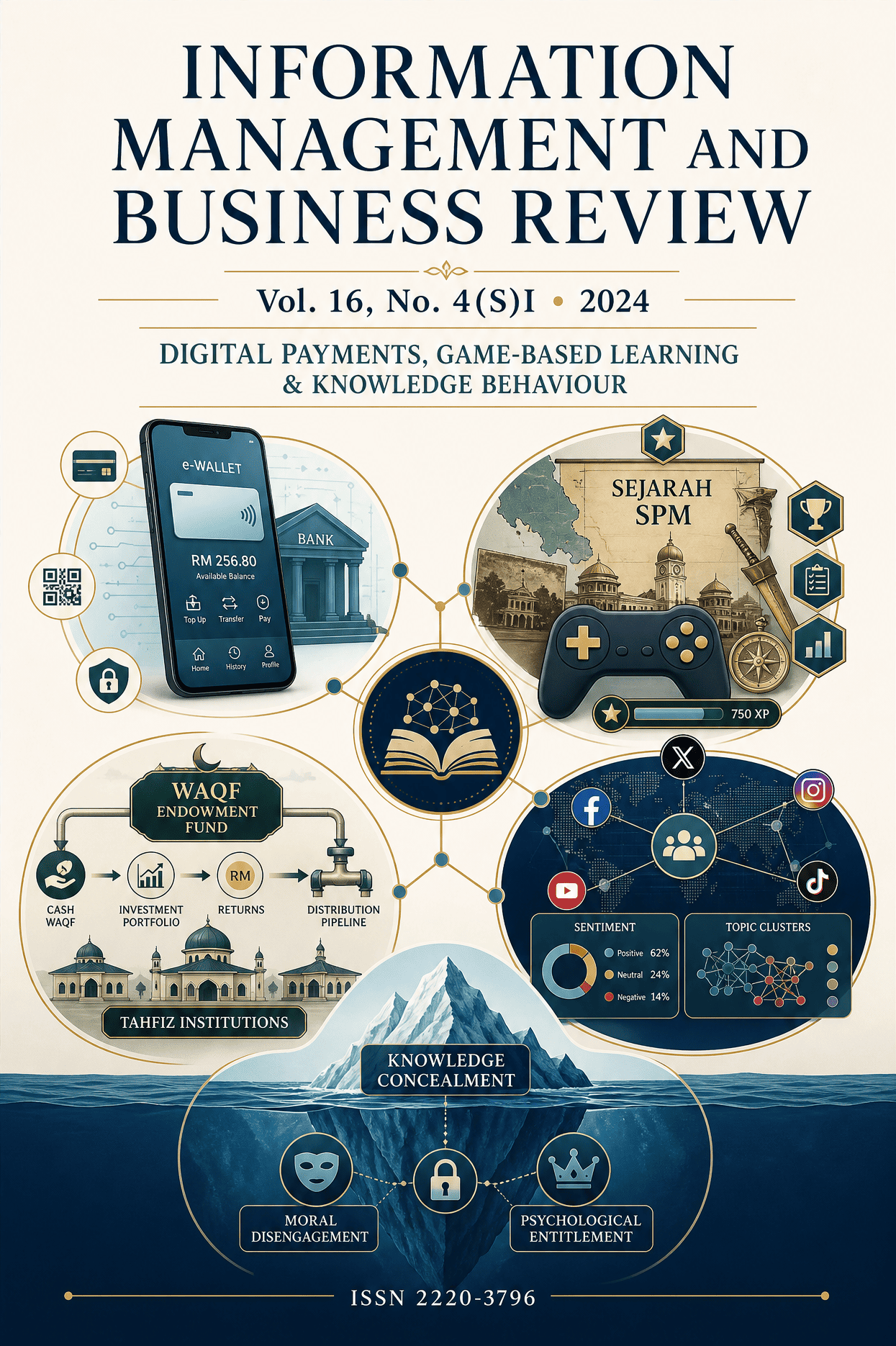
Articles 11–20 of 45

  • Article 11 in this issue

    Community Leaders’ Financial Literacy Towards Sustainable Community in Malaysia

    • Author: Azlina Rahim, Vani Tanggamani, Hamidah Bani, Muhammad Syukri Abdullah, Mohd Mas Rizat Abdul Latif

    In the fast-paced world of the 21st century, where economic landscapes evolve rapidly, financial literacy has become vital for leaders across all sectors. It equips them to navigate complex financial environments, make informed decisions, and adapt to economic shifts that directly impact their organizations and communities. In Malaysia, the government has formed the Community Leaders under the rural development program for village development. As a result of that, the Ministry of Rural and Regional Development has allocated resources to assist community programs. Therefore, these community leaders should be equipped with financial literacy to ensure that the financial resources are managed efficiently and effectively. Financial literacy is one of the most important requisites to financial well-being. It is also described as the measurement of how well an individual can understand and use information related to finance to make decisions. The objective of this study is to examine the needs of the Financial Literacy Model for community leaders. Further, it will also determine the components to be included in the development of the Financial Literacy Model for enhancing the public financial management system among community leaders. A mixed method research design, which combined qualitative (focused group interviews on selected community leaders) and quantitative (questionnaires) data will be employed in this research. Data analysis in qualitative research focuses on the process of systematically searching and arranging the interview transcripts. Interview sessions are crucial for gaining a thorough understanding of financial knowledge and skills among leaders. The research is anticipated to assist policymakers, community leaders, and the government in improving sustainable community development.

    Pages 83-88

    PDF - Community Leaders’ Financial Literacy Towards Sustainable Community in Malaysia (opens in a new tab)
  • Article 12 in this issue

    Laws Related to Leaving Islam in Malaysia: Issues and Challenges in Legislation and Enforcement

    • Author: Pg Ismail bin Pg Musa, Jal Zabdi bin Mohd Yusof, Zulazhar bin Tahir, Ekmil Krisnawati Erlen Joni

    Schedule Nine of the Federal Constitution allows state governments to enact laws related to Islam within the scope of the schedule, including those relating to renouncing Islam and associated matters. Currently, states like Negeri Sembilan and Sarawak have enacted laws or procedures governing the process of leaving Islam. Through doctrinal study and existing legal texts, three main approaches are identified: criminalizing apostasy under Syariah law, addressing it through a mal application, and combining punitive and rehabilitative elements, such as istitabah (repentance) through the criminal process. Agencies directly involved include the State Religious Department, the State Religious Council, the Mufti's Office, and the Syariah Court. However, some applicants file Civil court cases to avoid the lengthy Syariah Court process. Furthermore, there are almost no reported cases of Syariah prosecution resulting from applications to leave Islam, which may relate to society’s varying views of apostasy, whether it is a criminal act ( riddah ) or a matter of religious freedom .

    Pages 89-94

    PDF - Laws Related to Leaving Islam in Malaysia: Issues and Challenges in Legislation and Enforcement (opens in a new tab)
  • Article 13 in this issue

    Factors that Influence Customer Satisfaction in Mobile Payment of Online Food Delivery Mobile Applications

    • Author: Yusri Arshad, Muhamad Afiq Mohd Sahar, Sharifah Norhafiza Syed Ibrahim, Mohd Mas Rizat Abdul Latif

    This study was conducted to determine factors influencing customer satisfaction in mobile payment of online food delivery mobile applications. It uses Technology Acceptance Management, Unified Theory of Acceptance and use of technology, and up-to-date quality of online food delivery. The factors suggested by the theories were perceived ease of use, privacy and security, and e-service quality. A questionnaire was utilized to collect respondents’ answers, and the data collected were analyzed using SPSS. The sample comprised of 269 respondents. It also advantages the researchers in these studies in online food delivery mobile applications to acquire understanding and experience.

    Pages 95-105

    PDF - Factors that Influence Customer Satisfaction in Mobile Payment of Online Food Delivery Mobile Applications (opens in a new tab)
  • Article 14 in this issue

    Save Our Sea: Game-Based Learning on Sea Environment Care

    • Author: Mohamad Hafiz Khairuddin, Nurazian Mior Dahalan, Siti Alin Alia Binti Shukri, Mohd Rahmat Mohd Noordin, Anis Amilah Shari

    This study introduces the development and evaluation of a 2D marine pollution awareness game to address the pressing issue of marine pollution. The study addresses the challenges associated with raising awareness about marine pollution, including the lack of knowledge and awareness among the general public regarding the impact of marine pollution on the environment. The lack of effective educational tools and resources to communicate the complexities of marine pollution poses a significant problem. To tackle these issues, the study aims to develop a 2D marine pollution awareness game that not only educates but also engages players in a meaningful way. The game's objective is to educate players about the environmental impact of marine pollution while engaging them through interactive gameplay. The Rapid Application Development (RAD) methodology involved designing the game's mechanics, graphics, and audio elements using tools like Construct, Aseprite, and Canva, followed by usability testing using the Game Experience Questionnaire (GEQ). The findings indicate positive feedback from participants, highlighting high levels of immersion and positive affect, but also suggest areas for improvement in terms of the challenge level and flow. Future work includes enhancing the game's challenges, adding multiple languages for broader accessibility, and exploring the integration of VR/AR technologies to enhance educational impact. This study underscores the potential of the game as a tool for environmental education and conservation, with opportunities for further development and impact in raising awareness about marine pollution.

    Pages 106-117

    PDF - Save Our Sea: Game-Based Learning on Sea Environment Care (opens in a new tab)
  • Article 15 in this issue

    Waqf-Based Social Business: A Financial Alternative to Private Tahfiz Institutions

    • Author: Nor Tasik Misba, Nurul Amyra Mat Isa, Nurjannah Salleh

    Tahfiz institutions are now gaining popularity among Malaysians, and they have a lot of potential to be part of the mainstream education system. The growing demand for Tahfiz has resulted in a rise in the number of Tahfiz institutions in Malaysia especially private Tahfiz owned by individuals. However, most of the private Tahfiz institutions in Malaysia face financial constraints and struggle to obtain sufficient funding for their operations and infrastructure development. This may affect the operation of Tahfiz institutions in general. Therefore, the lack of funds has had many direct and indirect effects on the operation of Tahfiz institutions. Lack of resources, especially financial, hinders the institution's ability to provide a conducive learning environment for students. Tahfiz institutions in Malaysia are completely dependent on student fees as their main source of funds. Thus, this paper aims to propose the role of waqf as an alternative to help Tahfiz institutions, especially private Tahfiz in ensuring the sustainability of their operations. A review of existing literature on waqf education, development of private Tahfiz, and financial constraint. A proposed model was developed to assist the financial burden of private Tahfiz through a Waqf-based Social Business model.

    Pages 118-124

    PDF - Waqf-Based Social Business: A Financial Alternative to Private Tahfiz Institutions (opens in a new tab)
  • Article 16 in this issue

    JomRonda: Mobile Application for Security Guard Patrolling

    • Author: Nur’Ain Syafiqah binti Bibit, Zamlina binti Abdullah, Nurazian binti Mior Dahlan, Azlin binti Dahlan

    Security patrolling is the process of routinely walking or driving through an area to maintain safety and follow the rules. Few studies discovered issues in security, accuracy and dependability of using noncomputerized devices such as watchman clock. One of the issues is hard to monitor the tasks where the watchman tends to avoid their duties by attempting to use the duplicity and adjustment to the watchman’s clock and the key. Yet, the watchman forgets to make daily reports in a logbook at each checkpoint resulting in inaccuracy for authorities to attend and managing any serious emergency. Focussing on the issues, this application is designed with patrolling techniques called geofencing whereby the watchman's location is tracked and data about patrolling is recorded to a database once crosses a virtual boundary. Stakeholders get benefit from the application by keeping track of and reading daily reports digitally. Furthermore, it contains SOS features or international standards for signalling distress allowing users to alert one another in the event of an emergency in the area via a form and an in-app notification. This project follows a methodology known as the Modified Waterfall Model, which entails four stages: requirement gathering and analysis, design, implementation and testing. Future improvements are daily and monthly reporting to authorities can be generated and sent through email. Yet, the application needs temporary storage and the database will be updated as soon as the internet connection is restored.

    Pages 125-133

    PDF - JomRonda: Mobile Application for Security Guard Patrolling (opens in a new tab)
  • Article 17 in this issue

    Construct Validity of Adaptive Performance: A Case of Malaysian Lecturers

    • Author: Ainaa Idayu Iskandar, Noor Rafhati Romaiha, Arnida Jahya

    The virtual mode of the classroom that changes from the traditional education model poses challenges among the educators especially the inability to cope with the adaption of educational technologies. Online literacy is the basic skill to exercise an outstanding performance during changing environments. However, the conceptualization of adaptive performance seeks further exploration mainly because the past studies focus on the specific context. This study aims to present the validity and reliability of the adaptive performance construct related to online teaching platforms among Malaysian public university lecturers. The questionnaire was designed using Google Form and the adopted questionnaire was emailed to lecturers of Malaysian Research Universities (henceforth, RUs) via their institution’s email address. The data were then analyzed using the SmartPLS software through the measurement model analysis. The analysis involved a second-order approach where the outer loading values, the convergent validity of Average Variance Extracted (henceforth, AVE), and reliability analysis of the adaptive performance construct. The findings suggest that the validity and reliability of the construct were established for the context of the study. The Cronbach Alpha and composite reliability values scored above the threshold values. This study confirmed the adaptive performance instrument among the lecturers in Malaysia and can provide insight for future research. The limitation includes the sample of the study that was rather homogenous which it only focused on lecturers from Malaysian RUs.

    Pages 134-142

    PDF - Construct Validity of Adaptive Performance: A Case of Malaysian Lecturers (opens in a new tab)
  • Article 18 in this issue

    Cashless Payment among Rural Youth in Malaysia: Push Factors and Challenges

    • Author: Suhailah Kassim, Shafinar Ismail, Nur Hafidzah Idris, Mohd Zailani Othman, Suraya Hamimi Mastor, Nor Asikin Shaharuddin

    Fintech has become deeply embedded in society, enhancing daily life. Among the most utilized fintech services is cashless payment. Despite the benefits of cashless payments, their adoption among rural youth in Malaysia remains insufficient. This study investigates the factors driving and the challenges hindering the use of cashless payments among rural youth in Malaysia. A qualitative method, utilizing structured interviews, was conducted across all states in Malaysia. Thirty-nine in-depth interviews were conducted with rural youth from Perlis, Kedah, Perak, Pulau Pinang, Selangor, Negeri Sembilan, Melaka, Johor, Pahang, Terengganu, Kelantan, Sabah, and Sarawak. Most interviews were conducted face-to-face, with some online due to geographical constraints. The study identified inadequate infrastructure, limited cashless transaction operators, and a lack of digital literacy as primary barriers. Despite these obstacles, rural youths were highly optimistic about adopting cashless transactions, indicating their potential to engage actively in the digital economy and contribute to financial inclusion initiatives. The findings significantly aid policymakers, financial institutions, and community leaders in formulating strategies to promote digital acceptance in rural areas. This study also enhances the current body of knowledge by offering a deeper understanding of the factors influencing digital payment adoption in rural areas.

    Pages 143-150

    PDF - Cashless Payment among Rural Youth in Malaysia: Push Factors and Challenges (opens in a new tab)
  • Article 19 in this issue

    Social Entrepreneurship Intention: Part and Parcel of Intention-Based Theories and Models

    • Author: Siti Daleela Mohd Wahid, Wan Mohd Hirwani Wan Hussain, Abu Hanifah Ayob

    Investigating spending behavior among students is essential, particularly in understanding how they allocate funds toward academic priorities. This article aims to explore students' spending habits and the key practices that influence the allocation of semester-based educational funding. The study adopts a quantitative, cross-sectional approach, with 501 respondents selected from six higher education institutions in Melaka through a quota sampling technique. Data analysis was conducted using IBM SPSS software (version 28.0). The results indicate that both financial management knowledge and peer influence have a positive impact on students' spending behavior. This research contributes to the literature by enhancing the understanding of spending behavior patterns across the institutions studied, while also offering practical insights for higher learning institutions (HLIs) in Malaysia and their students. Limitations and suggestions for future research are also addressed.

    Pages 151-165

    PDF - Social Entrepreneurship Intention: Part and Parcel of Intention-Based Theories and Models (opens in a new tab)
  • Article 20 in this issue

    Optimizing Financial Transparency and Accountability in Mosques: A Case Study Approach in Enhancing Reporting Practices

    • Author: Mohd Amran Mahat, Muaz Mohd Noor, Jismi Mohd Salleh, Mohd Syazwan Karim

    Financial reporting is essential for maintaining accountability and openness in non-profit organizations, including mosques. Notwithstanding the existence of worldwide financial reporting standards, mosques frequently have difficulties in conforming to standard practices owing to insufficient competence and the absence of established financial management frameworks. This case study analyses the financial reporting practices of a mosque in Malaysia, emphasizing critical issues such as the absence of standardized financial recording systems, procrastinated transaction paperwork, and restricted public financial disclosures. The study highlights the necessity for explicit financial separation between waqf and khairat monies, as each serves a unique function. It underscores the significance of streamlined financial recording methods to enhance openness, accountability, and community confidence. This research identifies essential areas for enhancement by comparing current behaviors with instructions provided by Malaysian religious authorities. Recommendations encompass the establishment of fundamental financial recording systems, the utilization of technology for real-time reporting, and enhanced adherence to financial regulations. The study adds to the expanding literature on financial accountability within religious non-profits and provides pragmatic suggestions for improving financial management in mosques. By using these methods, mosques can cultivate enhanced confidence between congregants and regulatory authorities, while assuring the appropriate management of donations and resources.

    Pages 166-175

    PDF - Optimizing Financial Transparency and Accountability in Mosques: A Case Study Approach in Enhancing Reporting Practices (opens in a new tab)