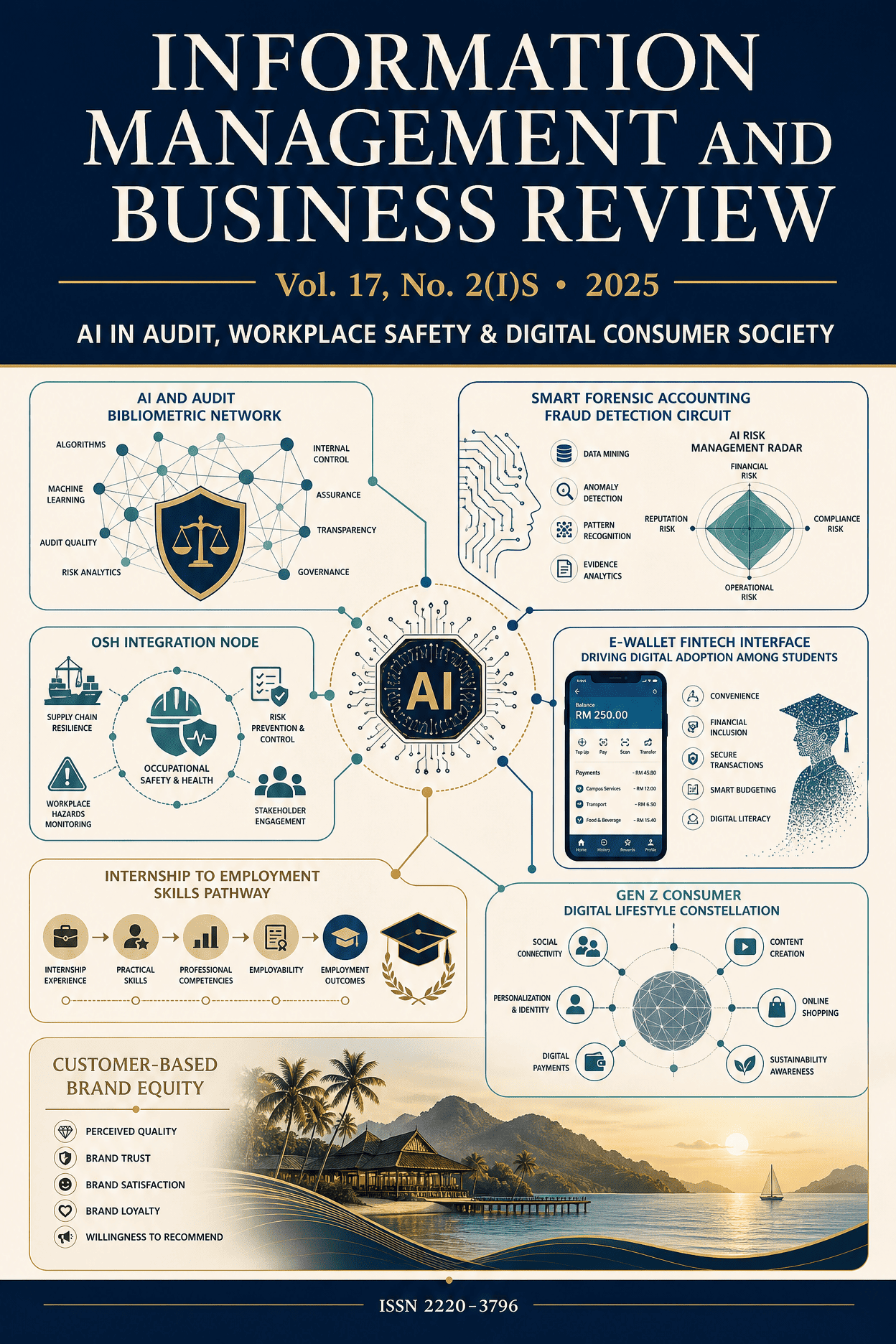
Articles 41–50 of 54

  • Article 41 in this issue

    What Is the Target Population for Agricultural Entrepreneurship in Malaysia's Agricultural Economic Sector? A Systematic Literature Review

    • Author: Sharina Shariff, Siti ‘Aisyah Baharudin, Nor Asmat Ismail

    The emerging trends of sustainability and globalization have driven changes in traditional agriculture dominated by aging farmers with low-tech industries. This scenario seems to have changed with new and diverse phenomena focusing on the agent who can adopt these changes. Hence, the new opportunitybased view of the entrepreneurship concept and youth as relevant agents within the new context in the agriculture sector. Numerous previous scholars have concentrated on typical entrepreneurship research; however, they have mainly neglected agricultural entrepreneurship within the agriculture sector. The study aims to investigate agricultural entrepreneurship within the target group in Malaysia through a comprehensive literature review. The articles reviewed were used from the Scopus, ScienceDirect and Google Scholar databases. We analysed 15 papers that focus on agricultural entrepreneurship research in Malaysia, which were published in Malaysia between 2014 to 2024, in order to contribute significantly to existing literature. The finding shows that the growing and promising agriculture entrepreneurship, mainly in intention and behavior, has become a crucial role among youth towards it. This study presented a descriptive finding and a thematic analysis focused on a groomed group of Youth Agropreneurs to adopt the changes into the agriculture sector. The paper concludes by setting up the agenda for future researchers in the field to address research gaps. Keywords: Target Population, Agricultural Entrepreneurship, Agriculture Sector, Malaysia, Systematic Review.

    Pages 477-497

    PDF - What Is the Target Population for Agricultural Entrepreneurship in Malaysia's Agricultural Economic Sector? A Systematic Literature Review (opens in a new tab)
  • Article 42 in this issue

    Assessing the Contribution of Internship Program to Skills Acquisition: Evidence from BA Insurance Students at UiTM

    • Author: Rosmi Yuhasni Mohamed Yusuf, Muhammad Hafiz Yaakub, Afizul Mohamood

    This study examines how internships affect the skill development of undergraduate students enrolled in Universiti Teknologi MARA's (UiTM) Bachelor of Insurance program. The study examines four important aspects: professional development, professional skills, personal growth, and personal capabilities. It is based on the Social Learning Theory. A simple random sample of 58 final-year students who finished a sixmonth internship was given a structured questionnaire with 23 Likert-scale items as part of a quantitative research design. Tests for reliability and normality were performed as part of descriptive and inferential analyses. According to the results, internships greatly improve students' professional skills, personal development, and personal capabilities, with personal capabilities being the aspect that is most highly rated. Even though professional development received positive feedback as well, it varied the most, indicating irregularities in career alignment and mentoring. These findings highlight the importance of internships in developing skills that are relevant to the industry, emotional intelligence, flexibility, and career clarity. According to the study's findings, organized internships are essential for connecting academic understanding with practical experience in the insurance industry. Enhancing supervisor engagement, updating internship results, and promoting closer university-industry collaboration are some of the recommendations. The results provide useful information for educators, employers, and legislators who want to improve internship opportunities and increase the employability of graduates in insurance and related industries.

    Pages 498-508

    PDF - Assessing the Contribution of Internship Program to Skills Acquisition: Evidence from BA Insurance Students at UiTM (opens in a new tab)
  • Article 43 in this issue

    Balancing Act: How Work-Life Balance, Workload, Role Conflict and Work Engagement Impact Job Performance in Financial Institutions

    • Author: Nabila Izzati Abdul Kadir, Noor Azura Dahalan, Dayang Nailul Munna Abg Abdullah, Ridhawati Zakaria, Syarifah Mastura Syed Abu Bakar, Muna Wadhiha Mohd Fauzi, Mohd Fahimi Ahmad

    Achieving high levels of employee performance is a fundamental objective for organizations aiming to maintain competitiveness and operational excellence. To realize this goal, management must focus on monitoring and enhancing individual job performance. However, many organizations continue to face challenges in identifying which workplace factors most directly impact performance. This study addresses the gap by examining specific variables that influence job performance among employees in financial institutions by looking at the areas of work-life balance, workload, role conflict, and work engagement on job performance among employees in financial institutions. Quantitative research design was used in this study, which involved the process of collecting the information via online survey questionnaires from 125 respondents. The findings reported that there were three variables that had a significant relationship towards job performance, which were work-life balance, role conflict, and work engagement. Only one variable was not significant, which was workload. It is very crucial for the management, specifically the HR team in the organization, to enhance employees' job performance to ensure employees are more productive in their daily duties as well as perform their jobs.

    Pages 509-515

    PDF - Balancing Act: How Work-Life Balance, Workload, Role Conflict and Work Engagement Impact Job Performance in Financial Institutions (opens in a new tab)
  • Article 44 in this issue

    The Nexus between Product Features, Brand Image, Service Quality and Islamic Banking Performance in Malaysia

    • Author: Muhammad Ridzuan Abdul Aziz, Nuralya Natasha Musa, Nursarah Yasmin Kamal Hashim, Nurul Amirah Hasanah Abdul Wahab, Siti Maryam Alias, Wan Muhammad Idham Fahmi Wan Anuar

    Islamic banking in Malaysia has been operating in parallel to conventional banking since the establishment of the first Islamic bank in the country in 1983. Thus, Islamic banking in Malaysia has been facing stiff competition against traditional banking in the country with a mixed population of Muslims and nonMuslims. It is crucial to identify the factors that may impact the performance of Islamic banking in the country. Therefore, this research aims to explore the factors that could affect Islamic banking performance in Malaysia. This research presents a conceptual framework on the effects of product features, brand image, and service quality on Islamic banking performance, based on the review of past research. Research hypotheses are proposed based on the theorised relationship among the variables in this research. Significant effects are expected between product features, brand image, service quality, and Islamic banking performance. This research highlights the importance of Islamic banks to manage their product features, brand image, and service quality to enhance their performance in the highly competitive banking industry.

    Pages 516-522

    PDF - The Nexus between Product Features, Brand Image, Service Quality and Islamic Banking Performance in Malaysia (opens in a new tab)
  • Article 45 in this issue

    The Nexus between Operational Failure and Mobile Banking Usage in Malaysia: A Conceptual Framework

    • Author: Muhammad Ridzuan Abdul Aziz, Ahmad Razieman Khairul Emran, Muhammad Syukri Mohamed Kamal, Nor Atikah Pishal, Nurul Asyikin Syahiran, Qistina Damia Sorfina Hisham

    Mobile banking has become a common method used by banks in delivering their products and services to customers. However, operational issues occur in the use of mobile banking, including function failure, system failure, information failure, and service failure. Therefore, this research aims to explore the factors that could affect mobile banking usage in Malaysia. Hence, this research presents a conceptual framework on the effects of operational failure (function failure, system failure, information failure, and service failure) on mobile banking usage. Research hypotheses are proposed based on the theorised relationship among the variables in this research. Significant relationships are expected between function failure, system failure, information failure, service failure, and mobile banking usage. It is hoped that this research will provide insights to the banks in effectively managing their mobile banking platform in serving the customers.

    Pages 523-530

    PDF - The Nexus between Operational Failure and Mobile Banking Usage in Malaysia: A Conceptual Framework (opens in a new tab)
  • Article 46 in this issue

    Effects of Customer-Based Brand Equity (CBBE) on Guest Experience in Beach and Island Resort

    • Author: Nor Diyana Mohammed Shobri

    This study investigates the effect of customer-based brand equity (CBBE) on guests’ experience in the beach and island resort settings. A survey method was adopted by using a self-administered questionnaire. Purposive sampling was employed, and data were collected from 200 guests who had stayed at beach and island resorts in seven destinations. A Structural Equation Model (Partial Least Squares-SEM or PLS-SEM) approach was applied to analyze the data. The findings in this study reveal that the hypothesized relationship between brand association and guests’ experience and perceived quality was supported. However, the findings failed to support the hypothesized relationship between brand awareness and guests’ experience. This study offers several theoretical contributions, followed by managerial implications and outlines potential directions for future research.

    Pages 531-541

    PDF - Effects of Customer-Based Brand Equity (CBBE) on Guest Experience in Beach and Island Resort (opens in a new tab)
  • Article 47 in this issue

    An Organization DNA Model: UiTM in Analysis

    • Author: Mudiana Mokhsin, Afdallyna Fathiyah Harun, Wan Nurhayati Wan Hanafi, Umaimah Kamarulzaman, Nur Huda Nabihan Md Shahri, Mohd Husni Mohd Som, Amer Shakir Zainol

    This study focuses on Universiti Teknologi MARA (UiTM), highlighting its academic success and strong employee character. It aims to identify employees' trust in the institution and analyze the data using qualitative content analysis. Three data sources were used: an interview with the former Vice-Chancellor, an exploratory survey with 187 respondents from various categories, and secondary data from the ViceChancellor’s speeches and writings. Methods included content analysis, exploratory data analysis, and word frequency analysis. The study draws a comparison between UiTM's organizational structure and DNA, where the backbone represents "Nation (Bangsa), Knowledge (Ilmu), and Success (Berjaya)," and the nitrogenous bases symbolize "Thinking (Pemikiran), Emotions (Emosi), Spirit (Semangat), Aspirations (Aspirasi), and Behavior (Tingkah laku)." These elements form the PESAT model, which encompasses the core components of UiTM’s identity. The research contributes by offering a framework for managing large institutions like UiTM, ensuring a sustainable identity, and guiding future aspirations. This model provides valuable insights into the institution’s community and its continued development.

    Pages 542-552

    PDF - An Organization DNA Model: UiTM in Analysis (opens in a new tab)
  • Article 48 in this issue

    Policyholders’ Knowledge in Claiming Life Insurance: A Conceptual Paper

    • Author: Azreen Roslan, Faziatul Amillia Mohamad Basir, Nurul Hidayah Zainal, Ainol Fizy Ruslan, Mohamad Firdaus Hairuddin, Susnaningsih Muat

    Life insurance is one of the most important insurance products that is available in the market, where its vital function is to provide financial security and protection to the beneficiaries upon the demise of the policyholder. The effectiveness of insurance operations lies in the efficiency with which claims are served to policyholders. Despite its importance, many individuals still lack knowledge of how to claim their life insurance policy. This lack of knowledge poses a threat to both beneficiaries and the nation, particularly given the low ownership of life insurance among individuals in Malaysia. This research investigates the impact of education, claims processes, and intermediary services on claims knowledge within the life insurance sector, utilizing the Resource-Based View as a theoretical framework. The study examines the role of educational initiatives, the claim process and effective intermediary services to enhance policyholders’ knowledge of their rights and responsibilities. Hence, it will lead to more informed decisions and fewer disputes between the policyholders and insurance operators. In the long run, the life insurance companies may boost their competitive advantages and remain sustainable in a dynamic insurance market. Future research should focus more on longitudinal studies to expand the discussions on the factors affecting the policyholders’ claim knowledge

    Pages 553-560

    PDF - Policyholders’ Knowledge in Claiming Life Insurance: A Conceptual Paper (opens in a new tab)
  • Article 49 in this issue

    Understanding Job Satisfaction in Malaysia’s Banking Sector: The Role of Work Environment, Training and Compensation

    • Author: Jang Siew Cheung, Ruzita Manshor, Nurul Illahi Zainal Abidin, Nor Lela Ahmad, Nurazlina Samsudin, Noor Azlina Mohamed Yunus

    This study examines the key factors that influence employee job satisfaction within the Malaysian commercial banking sector, focusing on the roles of the work environment, professional development opportunities, and compensation packages. Responding to critical gaps in the literature, such as the sector's high workload, limited autonomy, lack of recognition, and increasing staff turnover, this research aims to evaluate how these factors contribute to job satisfaction among banking employees. A quantitative survey targeting employees from various hierarchical levels in commercial banks was conducted, utilizing a structured questionnaire and a five-point Likert scale to explore the roles of work environment, professional development, and compensation in job satisfaction. Data were collected from 149 respondents using a simple random sampling method. The study employed multiple linear regression analysis using SPSS version 28 to determine the job satisfaction that the independent variables would predict based on the identified associations. The results reveal that the three factors which are work environment, training and development, and salary and benefits have a positive and significant impact on job satisfaction. T he results emphasize the importance of organizational support systems to enhance employees' wellness and improve retention in the banking industry. The study provides practical implications for human resource policies to reduce dissatisfaction and encourage a more motivated and engaged workforce.

    Pages 561-569

    PDF - Understanding Job Satisfaction in Malaysia’s Banking Sector: The Role of Work Environment, Training and Compensation (opens in a new tab)
  • Article 50 in this issue

    Digital Entrepreneurship Intention among Bumiputera University Students and the Role of Entrepreneurial Education

    • Author: Soo-Cheng Chuah, Roslilee Ab Halim, Theng-Huey Goh, Mohd Zawawi Zukfily

    The influence of digital technologies has transformed many aspects of life globally, including the way we do business. The shift from traditional business paradigms has created vast opportunities for value creation. With the increasing challenges, competition, and uncertainty in the job market, digital entrepreneurship has provided an alternative career path for young adults to create employment opportunities and become selfreliant. Digital entrepreneurship has emerged as a crucial driver of economic innovation, requiring a strong entrepreneurial mindset among university students. This study examines the factors that influence digital entrepreneurship intention. Utilizing a structured quantitative approach, key determinants from the Theory of Planned Behavior (personal attitude, subjective norms and perceived behavioral control) are analyzed alongside entrepreneurial education to assess the impact on Bumiputera students’ readiness and motivation to engage in digital ventures through a survey questionnaire. 173 valid responses from students of University Technology MARA were analyzed using Partial Least Squares Structural Equation Modeling (PLS-SEM). The results showed that subjective norms and perceived behavioral control were positively significant in influencing digital entrepreneurship intention. However, attitude and entrepreneurial education have no significant effect on digital entrepreneurship intention within this demographic. Findings of the study provide an understanding of factors that shaped Bumiputera students’ intention to explore new ventures of entrepreneurial aspirations in the digital domain. These counterintuitive results suggest that the current approach to entrepreneurial education may not be sufficient to ignite the specific intent among Bumiputera students to engage in digital ventures. These results offer valuable insights for educators and policymakers seeking to enhance entrepreneurship programs.

    Pages 570-581

    PDF - Digital Entrepreneurship Intention among Bumiputera University Students and the Role of Entrepreneurial Education (opens in a new tab)