Articles 11–20 of 21

  • Article 11 in this issue

    Challenges in Maintaining Halal Integrity in the Logistics Industry: A Case Study of Kokubu Food Logistics Malaysia Sdn. Bhd

    • Author: Muhamad Firdaus Mahmud, Izatul Akmar Ismail, Siti Aisyah Yusof, Sakinatul Raadiyah Abdullah

    Halal logistics has become an increasingly important component of Malaysia’s supply chain ecosystem, reflecting both religious obligations and growing consumer expectations for transparency and integrity. Although Malaysia is recognized for its robust halal certification framework, maintaining halal integrity in logistics operations remains a challenging task, particularly for multinational firms navigating diverse regulatory environments and customer demands. The study aims to (1) examine halal logistics from an Islamic perspective, (2) analyze the processes of maintaining halal certification, and (3) identify the challenges faced by logistics operators in sustaining compliance. This study examines how Kokubu Food Logistics Malaysia Sdn. Bhd. (KFLM), a subsidiary of Japan’s Kokubu Group, manages the complexity of sustaining halal compliance in daily operations. Using a qualitative case-study approach, data were collected through semi-structured interviews with three key personnel directly involved in halal logistics management. Thematic analysis was applied to identify major themes related to research objectives. The findings show that while KFLM has established a strong Halal Assurance System supported by clear SOPs, regular audits, and departmental coordination, the company continues to face financial pressures, varying levels of staff awareness, and inconsistent customer compliance. External regulatory changes further compound these issues, particularly when global halal standards do not align with JAKIM’s guidelines. Despite these challenges, the study highlights KFLM’s resilience through continuous training, structured documentation practices, and close engagement with certification authorities. The research contributes to the theoretical understanding of halal logistics as an operational expression of Maqasid al-Shariah and offers practical insights for policymakers seeking to strengthen standard harmonization, traceability, and industry support mechanisms. Overall, the study underscores that halal logistics is not merely a technical process but a reflection of ethical responsibility, organizational discipline, and the broader principles of amanah and halalan toyyiban.

    Pages 125-140

    PDF - Challenges in Maintaining Halal Integrity in the Logistics Industry: A Case Study of Kokubu Food Logistics Malaysia Sdn. Bhd (opens in a new tab)
  • Article 12 in this issue

    Drivers and Constraints of Remanufacturing: A Global Bibliometric Review

    • Author: Mohd Rizaimy Shaharudin, Azyyati Anuar, Preecha Wararatchai, Natapat Areerakulkan, Wissawa Aunyawong

    This study aims to provide a global bibliometric review of scholarly research concerning the drivers and constraints in the domain of remanufacturing, which also seeks to provide a blueprint of the intellectual structure and thematic evolution, along with collaboration patterns in this important area of sustainability. This study reviews 1,162 publications from Scopus’s 2015–2025 database, employing bibliometric methods using VOSviewer and Harzing’s Publish or Perish software. This study measures the trends in publications, authorship, subject areas, and keyword co-occurrence networks. The results show an exponential increase in research output since 2019, with Environmental Science and Engineering dominating the publications. Research output stems from the drivers which include the absence of policy and regulatory support, economic incentives and profitability, sustainability and resource efficiency, market demand and consumer behaviour, and technological improvement. The constraints of research output include consumer perception and acceptance, high initial investment and financial viability, lack of skilled workforce, product design and technical obstacles, and reverse logistics and supply chain uncertainty. Research also shows the strong interdisciplinary nature of the field. The primary focus of research is still concentrated in Europe and East Asia. By integrating ten years of worldwide research, this study aims to create a systematic evidence base for academics and practitioners. In closing, it advocates for research on remanufacturing to be more inclusive, context-sensitive, and transdisciplinary so that remanufacturing can develop as a scalable, equitable, and transformative component of the circular economy.

    Pages 141-163

    PDF - Drivers and Constraints of Remanufacturing: A Global Bibliometric Review (opens in a new tab)
  • Article 13 in this issue

    Engaging the Loop: A Conceptual Framework Linking Stakeholder Engagement to Circular Economy Adoption for Waste Reduction

    • Author: Azyyati Anuar, Mohd Rizaimy Shahrudin, Daing Maruak Sadek, Hafizah Hammad Ahmad Khan, Azlyn Ahmad Zawawi, Noorlailahusna Mohd Yusof, Abdul Rashid Mohd Ghazalli

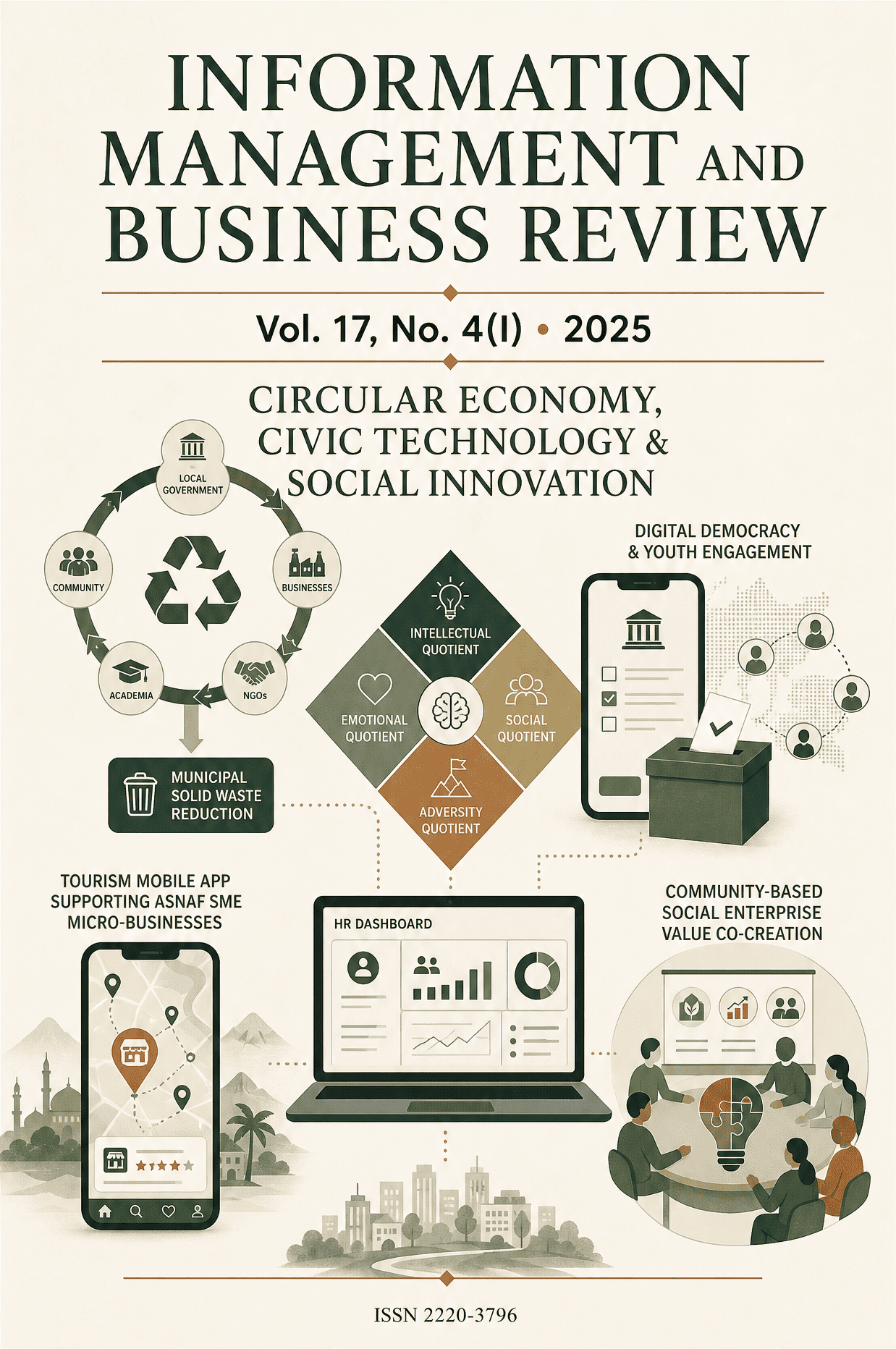
    This study addresses persistent challenges in municipal solid waste systems, namely low diversion and uneven resource recovery, by examining how stakeholder engagement (with communities, suppliers, and regulators) supports the adoption of circular economy (CE) practices and how operational change, often termed green process innovation, drives measurable waste outcomes. The central hypothesis is that CE adoption mediates the relationship between stakeholder engagement and waste reduction. Using a narrative review oriented to concept development, records were retrieved from the Scopus database (articles and reviews, 2000–2025, English) with a reproducible query targeting stakeholder engagement, CE, policy/strategy, and organizational settings. After de-duplication, titles/abstracts and full texts were screened for relevance to engagement, CE adoption, and waste outcomes or proxies; data were extracted into a conceptcentric matrix and synthesized via integrative thematic analysis. Primary outcomes were diversion rate, secondary material yield, and contamination reduction. The synthesis reveals two pathways: (1) a direct association whereby engagement mobilizes source separation, social acceptance of reuse/repair, and takeback participation; and (2) a stronger, mediated pathway in which engagement enables CE adoption, such as design for disassembly, industrial symbiosis, organics valorization, and optimized recycling–recovery portfolios that directly improves diversion and recovery. Governance capacity, policy coherence, and digital readiness strengthen these effects. Overall, stakeholder engagement improves waste outcomes primarily by deepening and routinizing CE adoption, with supportive governance and policy environments amplifying gains. The resulting framework offers testable propositions and practical guidance for municipalities and firms seeking scalable circular outcomes.

    Pages 164-173

    PDF - Engaging the Loop: A Conceptual Framework Linking Stakeholder Engagement to Circular Economy Adoption for Waste Reduction (opens in a new tab)
  • Article 14 in this issue

    The Evolution of Disclosure Practices: A Bibliometric Mapping of Voluntary and Mandatory Disclosures Across International Contexts

    • Author: Nur Zharifah Che Adenan, Roshima Haji Said, Syahiza Arsad

    This study presents a bibliometric analysis of voluntary and mandatory disclosure practices to examine their evolution, thematic trends, and intellectual structures within the international accounting literature. Using data extracted from the Scopus database, covering publications between 2010 and 2025, a total of 1,196 records were analysed through bibliometric techniques, including citation analysis, keyword cooccurrence mapping, and network visualisation. Tools such as Harzing’s Publish or Perish and VOSviewer were employed for data cleaning, standardisation, and visualisation. The findings reveal three distinct phases in the development of disclosure research: an initial formative stage (2010–2015) focused on financial reporting and information asymmetry, an expansion stage (2016–2020) driven by regulatory reforms such as the EU Directive on non-financial disclosure, and a consolidation stage (2021–2025) marked by rapid growth in sustainability, ESG, and integrated reporting studies. The analysis identifies the United States, the United Kingdom, and Australia as the most active contributors, while emerging economies such as Malaysia, Indonesia, and China are increasingly represented. Keyword mapping highlights key themes, including corporate governance, sustainability, firm performance, and legitimacy, while also pointing to emerging areas such as digitalisation, artificial intelligence, and technological innovation in disclosure practices. The study concludes that disclosure research has matured into a dynamic, interdisciplinary field shaped by regulatory, market, and societal forces. Limitations of the study are found in its reliance on a single database and the exclusion of qualitative dimensions. Future research is recommended to explore underrepresented regions, assess disclosure quality, and investigate technology-driven reporting practices .

    Pages 174-188

    PDF - The Evolution of Disclosure Practices: A Bibliometric Mapping of Voluntary and Mandatory Disclosures Across International Contexts (opens in a new tab)
  • Article 15 in this issue

    Climate-Smart Governance and Food Security: Exploring the Mediating Effect of Sustainable Supply Chain Practices

    • Author: Roshima Haji Said, Nur Zharifah Che Adenan

    This study explores the continuing challenge of ensuring food security in an era of increasing climate uncertainty and environmental decline. Weak coordination among institutions and inefficiencies within food supply chains often limit the success of sustainable initiatives, despite growing commitment to climate-smart policies. This study seeks to understand how climate-smart governance can improve food security through the influence of sustainable supply chain practices. Using a narrative review approach, data were gathered from the Scopus database and examined through an integrative thematic analysis, aiming to identify coherent ideas and relationships linking governance, sustainability, and the resilience of food systems. The review shows that effective climate-smart governance contributes to stronger food security when supported by sustainable supply chain practices such as green logistics, reduced food loss, digital innovation, and collaboration among stakeholders. These practices make governance efforts more effective by improving how resources are managed, reducing environmental pressure and helping supply chains adapt to change, all of which support better food availability, access, and stability. This study makes a theoretical contribution by proposing a framework that positions sustainable supply chain practices as the connecting element between governance structures and food security outcomes. Practically, the findings provide valuable guidance for policymakers, supply chain professionals, and agricultural organisations to create more integrated and responsive governance systems. This is important for promoting sustainability, innovation, and building resilient food networks that are able to adapt to future global challenges.

    Pages 189-200

    PDF - Climate-Smart Governance and Food Security: Exploring the Mediating Effect of Sustainable Supply Chain Practices (opens in a new tab)
  • Article 16 in this issue

    Assessing the Impact of Proposed Tourism Apps on The Development and Economic of SME Asnaf Businesses in Perlis: A Qualitative Analysis Based on Tourist Perceptions

    • Author: Zati Hanani Ismail, Muhammad Nurfiqri Mohd Hajar, Fatimah Noni Muhamad

    The integration of tourism apps and the empowerment of asnaf entrepreneurs represent pivotal strategies in fostering sustainable economic development in Malaysia. Perlis has become one of the most visited states because of their natural beauty and unique attractions. By the year Visit Perlis 2024-2025, the state of Perlis has started the application of digital business, which is “Perlis Go Digital”. This initiative has been done in order to encourage the asnaf entrepreneurs to change towards digitalization. One qualitative study has been conducted to explore the intersection of the proposed tourism apps and tourist perspectives to understand their collective impact on the sustainable economy of SME and asnaf development. The researchers collected data through interviews and analyzed it using thematic analysis. Thematic analysis is a widely used qualitative research method for identifying, analyzing, and reporting themes within interview data. This method is used to investigate how tourism apps shape tourist experiences. Findings indicate that tourism apps enhance the visibility and accessibility of SME asnaf businesses, and facilitate market expansion. However, the study reveals that while tourism apps provide convenience and personalized recommendations, issues like data accuracy can affect user satisfaction. By integrating the perspectives of tourists, this study contributes to the development of inclusive digital ecosystems that promote equitable economic growth of SME asnaf businesses and enhance the overall tourism experience.

    Pages 201-211

    PDF - Assessing the Impact of Proposed Tourism Apps on The Development and Economic of SME Asnaf Businesses in Perlis: A Qualitative Analysis Based on Tourist Perceptions (opens in a new tab)
  • Article 17 in this issue

    The Impact of Employees’ AI Acceptance on Productivity in the Construction of Smart Hospitals: The Mediating Role of Collaboration

    • Author: Tang Song, Nor ‘Ain Bt Abdullah, Zunirah Mohd Talib

    Against the backdrop of China’s smart-hospital initiative, this review examines how frontline employees’ AI acceptance translates into productivity. Synthesizing 31 empirical studies published between 2020 and 2024 across clinical and managerial settings, the evidence is synthesized and organized around four acceptance dimensions—awareness, understanding, trust, and skills—as framed by the Technology Acceptance Model (TAM), Protection Motivation Theory (PMT), and Person–Environment Fit (PE Fit) theory. Across studies, understanding and trust are most consistently linked with faster decisions and higher service quality; skills underpin effective workflow integration. Crucially, employee-AI–AI collaboration mediates these effects in most samples, converting favorable mind-sets into operational gains via shared diagnosis, decision support, and scheduling optimization. We discuss boundary conditions (leadership, culture, prior experience) and propose an integrated pathway from acceptance to collaboration to productivity. The review provides a conceptual baseline for an upcoming large-scale survey and offers actionable recommendations: prioritize trust-building, formalize collaboration protocols, and invest in continuous AI-skilling to fully realize AI's potential for enhancing productivity in smart hospitals.

    Pages 212-221

    PDF - The Impact of Employees’ AI Acceptance on Productivity in the Construction of Smart Hospitals: The Mediating Role of Collaboration (opens in a new tab)
  • Article 18 in this issue

    The Impact of E-Money Usage on the Velocity of Money in Malaysia

    • Author: Fauziana Bt Fauzi Mat Rawi

    The rapid adoption of e-money in Malaysia has significantly transformed the landscape of financial transactions. As consumers and businesses increasingly prefer digital payment methods, questions arise about how these shifts affect fundamental monetary dynamics, particularly the velocity of money. This paper investigates the theoretical and conceptual relationship between e-money usage and the velocity of money in Malaysia, proposing that e-money impacts money velocity through two primary channels: transaction efficiency and monetary substitution. A conceptual framework is developed to guide future empirical research and inform policymakers on the evolving role of digital financial instruments.

    Pages 222-231

    PDF - The Impact of E-Money Usage on the Velocity of Money in Malaysia (opens in a new tab)
  • Article 19 in this issue

    Digital Currencies and Sustainable Finance: A Bibliometric Review of Global Research Trends

    • Author: Siti Murni Mat Khairi, Muhammad Zarunnaim Haji Wahab, Muhammad Hanif Othman, Ahmad Rusydan Ab Kadir, Nor Azri Sharizal Abu Bakar

    This study presents a comprehensive bibliometric analysis of research trends at the intersection of digital currencies and sustainable finance from 2018 to 2026. Drawing on 358 publications indexed in the Scopus database, the analysis employed Bibliometrics and VOSviewer to examine publication performance, citation structures, keyword co-occurrences, and thematic evolution. The results reveal a significant rise in scholarly attention toward digital currencies, particularly cryptocurrency, blockchain, and central bank digital currency (CBDC), with notable connections to themes of sustainability, green economy, and financial inclusion. The study identified cryptocurrency (31.01%), blockchain (14.25%), and bitcoin (13.13%) as the most prominent keywords, underscoring the dominance of technological innovation in reshaping financial ecosystems. Furthermore, the citation metrics (4,246 total citations; h-index = 34) indicate robust academic engagement and growing interdisciplinary collaboration. The findings highlight those digital financial innovations not only transform global financial structures but also play a pivotal role in promoting sustainable development and green finance initiatives. This bibliometric mapping offers valuable insights for policymakers, financial institutions, and researchers aiming to align digital finance strategies with sustainability objectives. Future studies are encouraged to explore the regulatory frameworks, technological ethics, and environmental impacts of digital currencies to foster an inclusive and resilient financial future.

    Pages 232-250

    PDF - Digital Currencies and Sustainable Finance: A Bibliometric Review of Global Research Trends (opens in a new tab)
  • Article 20 in this issue

    Examining the Relationship Between Web-Based Meal Ordering System Attributes and Nurses’ Satisfaction: A Case Study in a Healthcare Institute

    • Author: Nurhafizah Mohd Samsuri, Muhammad Izzat Zulkifly, Mohd Aliff Abdul Majid, Aliffaizi Arsat, Mior Mohamad Ahnaf Mior Faridalathrash

    The rapid advancement of technology within the healthcare industry has simplified the process of patient meal ordering, though it has introduced new challenges for nursing staff. A noticeable gap exists between traditional and computerized ordering systems, which this study aims to address. Specifically, the research examines the relationships between organizational context, timeliness efficiency, interface characteristics, and individual differences, and how these factors influence nurses' satisfaction with a webbased meal ordering system. Data collection was conducted using a primary survey method with a questionnaire utilizing a 5-point Likert scale, distributed to a select group of respondents. The collected data were analyzed with the Statistical Package for the Social Sciences (SPSS) version 25. Findings indicate a strong positive relationship between organizational context and user satisfaction, while timeliness efficiency displayed only a weakly supportive effect. Both interface characteristics and individual differences were found to have moderate support. These results suggest that system developers should consider periodic updates to enhance performance and address user needs more effectively.

    Pages 251-259

    PDF - Examining the Relationship Between Web-Based Meal Ordering System Attributes and Nurses’ Satisfaction: A Case Study in a Healthcare Institute (opens in a new tab)