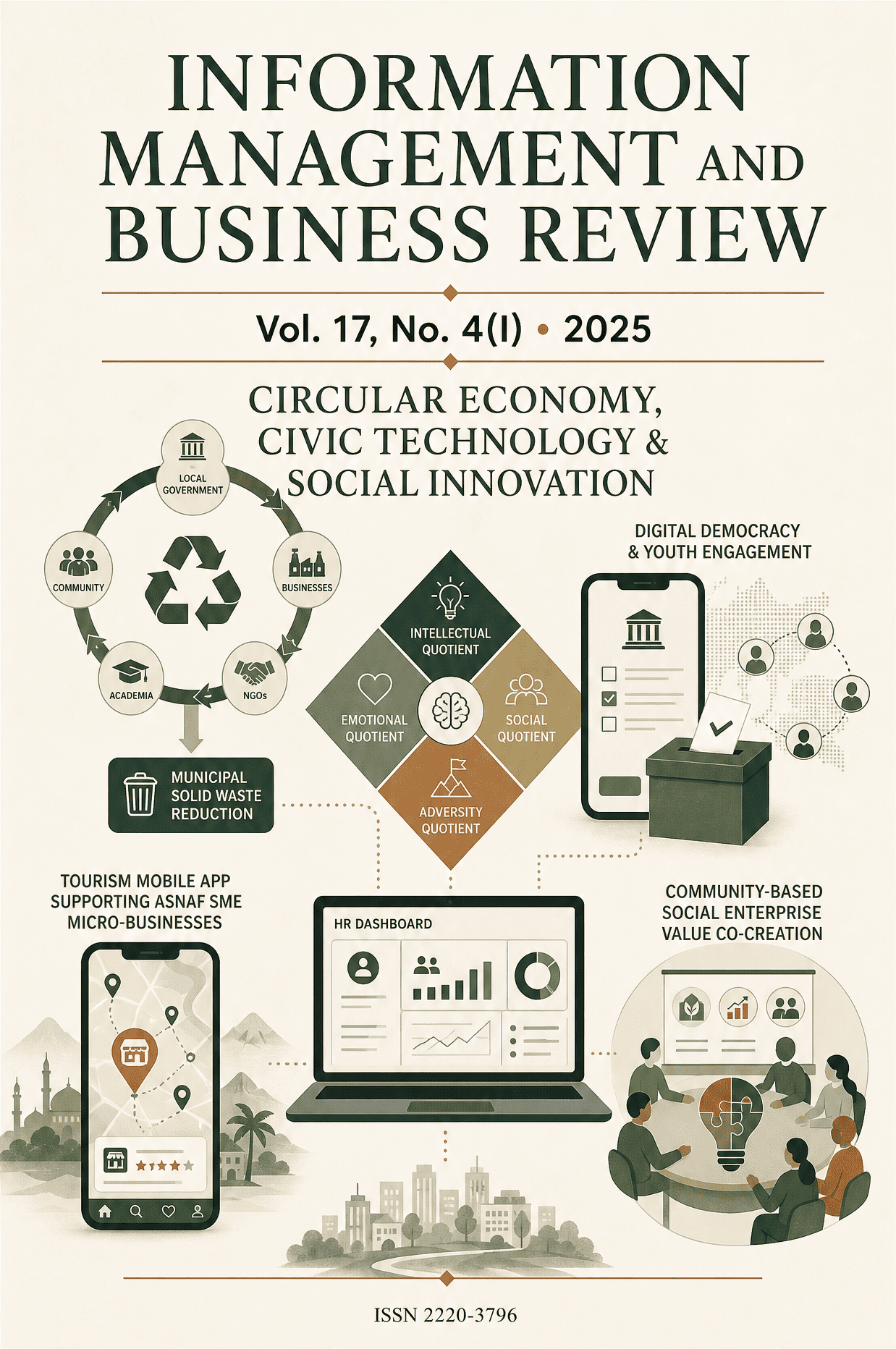
Articles 1–10 of 21

  • Article 1 in this issue

    An Examination of Intellectual, Emotional, Social and Adversity Quotient Toward Students’ Academic Success

    • Author: Johanudin Lahap, Noradilla Khalid, Nur Shahirah Md Isa, Noraslinda Mohd Said, Joesri Mohd Saber, Serli Wijaya

    In understanding students’ learning and student academic achievement, some factors need to be given attention. The primary objective of this research is to investigate a distinct type of quotient that affects students’ learning. Previous research has revealed that Intellectual Quotient (IQ), Emotional Quotient (EQ), Social Quotient (SQ), and Adversity Quotient (AQ) are among the most significant variables influencing student academic success. This research employed a quantitative method, and university students were the target sample. In this study, a total of 211 responses from 326 samples were successfully collected via a survey questionnaire. A Pearson's Correlation was used to measure the relationships between the independent and dependent variables. The analysis revealed that the four quotients were found to have a significant relationship with students’ learning; however, the degree of significance varies. The most significant finding from this research was that the adversity quotient exhibits the strongest relationship with students’ academic success. This study is important to academicians because understanding students' traits can assist lecturers in enhancing and strengthening their teaching and learning methodologies, and improving the content of lectures for students, thereby producing successful students academically.

    Pages 1-9

    PDF - An Examination of Intellectual, Emotional, Social and Adversity Quotient Toward Students’ Academic Success (opens in a new tab)
  • Article 2 in this issue

    Tipping Practices, Employee Motivation and Service Delivery Performance among 4 and 5-star Hotel Employees in Pulau Pinang

    • Author: Nurnadhirah Zahari, Zulhan Othman, Nor Adila Kedin, Azdel Abdul Aziz, Mohd Faeez Saiful Bakhtiar

    Tipping is a prevalent phenomenon that is best understood as a result of various cultural norms and payment practices. The anticipation of receiving the tips is considered work motivation; it acts as a catalyst for employees to elevate their service delivery. While it may a common for others, tipping is not customary among Malaysians. This paper examined the interconnection between tipping, employee motivation, and service delivery performance within the 4 and 5-star hotels in Pulau Pinang, Malaysia. Using a quantitative research approach, a total of 348 usable responses (collected among F&B employees) were retrieved for analysis. The findings revealed a significant positive relationship between all tested variables and employee motivation fully mediates the relationship between tipping practices and service delivery performance. The outcome from this study is hoped to provide valuable insights for academicians into consumer behavior and cultural practices, while offering the hotel industry strategies to improve the service delivery performance.

    Pages 10-18

    PDF - Tipping Practices, Employee Motivation and Service Delivery Performance among 4 and 5-star Hotel Employees in Pulau Pinang (opens in a new tab)
  • Article 3 in this issue

    Determinants of Employee Performance: Empirical Evidence from Indonesia

    • Author: Khoirul Aswar, Wisnu Julianto

    The purpose of this study was to investigate how employee performance is impacted by perceived ease of use, perceived usefulness, training efficacy, and motivation. The goal of this study is to raise the calibre of workers at the Republic of Indonesia's Ministry of Defence by using a sample of all work units. Purposive sampling was the method of sampling that was applied. In order to conduct this study, questionnaires with primary data, which were obtained from the responses of up to 60 employees with varying positions, were examined. Using the Smart Partial Least Squares (PLS) version 3.0 tool, test the variables using the Structural Equation Modelling (SEM) technique. The study found that while perceived usefulness had a significant impact on employee performance, perceived ease of use had no significant effect, training effectiveness had a significant effect, and motivation had a significant effect on employee performance. It is anticipated that contributions to ministries or institutions will enhance public sector governance and provide the public with input for policy formulation and full execution in ministries or institutions.

    Pages 19-27

    PDF - Determinants of Employee Performance: Empirical Evidence from Indonesia (opens in a new tab)
  • Article 4 in this issue

    A Holt-Winter Approach to Forecasting Admission in the Psychiatric Department

    • Author: Mariathy Karim, Nur Syuhada Muhammat Pazil

    Psychiatric admissions predictive modeling is a crucial step in hospital resource and service management. Prediction models are essential for medical facilities to account for patient arrival fluctuations that could potentially overextend their resources. The present study used the Holt-Winters method to forecast psychiatric admissions at Hospital Universiti Sains Malaysia (HUSM). The estimation and evaluation phases are based on historical admission data from 2017 to 2024 to extract trends, seasonal and level components. The dataset was split into training and testing phases to ensure robust model selection. Mean Absolute Scaled Error (MASE), Root Mean Squared Error (RMSE) and Mean Absolute Percent Error (MAPE) are used to compare the performance. This paper examines two forms of the Holt-Winters model: additive and multiplicative. The results reveal that the Additive Holt-Winters model consistently has the lowest error across all performance metrics. Thus, it is the best for predicting psychiatric patient admissions. The forecasting results indicate an overall increase in admissions with variations driven by seasonal factors. An accuracy assessment reveals that most predictions match actual admissions to some extent, suggesting the model is reliable. These include certain months that demonstrate standout differences, suggesting that other confounding factors may be influencing admission rates. It demonstrates the robustness of Holt-Winters’ forecasting methodology in healthcare and its implications for hospital administrators seeking to improve efficiency in the deployment of resources. Future work might also focus on combining other predictive tools to improve forecast quality.

    Pages 28-37

    PDF - A Holt-Winter Approach to Forecasting Admission in the Psychiatric Department (opens in a new tab)
  • Article 5 in this issue

    Impacts of Social Network Characteristics on Digital Seizing Capabilities and Sustainable Performance: Evidence from Advanced Manufacturing Clusters in China

    • Author: Ranlin Zhao, Lian Kee Phua

    This study investigates how social network relational characteristics (SNRC) and structural characteristics (SNSC) influence sustainable performance (SP) in China’s advanced manufacturing clusters, with particular attention to the mediating role of digital seizing capability (DSZC). Drawing on Social Network Theory and Dynamic Capabilities Theory, SP is conceptualized as a second-order construct that integrates economic, environmental, and social performance. Using survey data from 236 firms across eight national-level clusters, the analysis was conducted through Partial Least Squares Structural Equation Modeling (PLS-SEM). The findings demonstrate that SNRC significantly improves SP both directly and indirectly through DSZC. At the same time, SNSC affects SP only indirectly, underscoring the central role of DSZC in transforming network advantages into sustainability outcomes. These results extend theoretical insights by linking social networks and dynamic capabilities to sustainable competitiveness, though the reliance on data from a limited number of Chinese clusters may restrict broader generalization. The study contributes by offering new evidence on the mechanisms through which inter-firm networks foster digital-enabled sustainability, providing practical guidance for managers and policymakers in the Industry 4.0 era.

    Pages 38-53

    PDF - Impacts of Social Network Characteristics on Digital Seizing Capabilities and Sustainable Performance: Evidence from Advanced Manufacturing Clusters in China (opens in a new tab)
  • Article 6 in this issue

    Digital Technologies and Youth Democracy: A Narrative Review of Civic Participation, Digital Citizenship and Emerging Challenges

    • Author: Irwana Nooridayu Muhamad Hakimi, Azmil Mohd Tayeb, Noorayuni Rusli, Mohamad Ili Afiq Ibrahim

    The integration of digital technologies into everyday life has significantly influenced how young people engage with democratic processes, though the implications remain uneven and contested. Digital platforms offer opportunities for civic participation, activism, and political education; however, they also pose risks, including misinformation, polarization, and digital access inequalities, which raise concerns about the inclusivity of youth democracy. This study examines the role of digital technologies in shaping youth democratic engagement, with particular attention to civic participation, digital citizenship, and the challenges of digital environments. Using Scopus AI (search conducted on 11 September 2025), the review applied a narrative review approach combining a structured search string, summary and expanded summary analysis, concept mapping, topic expert profiling, and identification of emerging themes to synthesize literature across disciplines. The findings show that digital culture fosters new forms of engagement through online activism, global networks, while digital citizenship predicts both local and global participation. Nonetheless, challenges including misinformation, online harassment, and ethical concerns about technological determinism limit the democratizing potential of these tools. Emerging themes emphasize the importance of digital competence, innovations in digital democracy, youth-led digital activism, and the transformation of the public sphere. The study concludes that digital technologies present both opportunities and challenges for youth democracy, highlighting the need for educational reforms to strengthen digital literacy, policy interventions to ensure equitable access, and safeguards to protect democratic quality. These provide theoretical contributions to understanding democracy in the digital age and practical guidance for policymakers, educators, and civic organizations.

    Pages 54-65

    PDF - Digital Technologies and Youth Democracy: A Narrative Review of Civic Participation, Digital Citizenship and Emerging Challenges (opens in a new tab)
  • Article 7 in this issue

    Enhancing Financial Reporting Quality: The Association between Alternative Data, Information Timeliness and Analytics Capabilities

    • Author: Mohd Hafiz Hashim, Noora’in Omar, Muhammad Hariz Hamid, Mazlifa Md Daud, Mohd Faizal Jamaludin

    Financial reports have traditionally relied on historical data, but this approach is increasingly inadequate in today’s fast-moving and data-rich financial environment. While prior studies have examined individual types of alternative data, such as social media sentiment or web traffic, there has been a limited comprehensive evaluation of how these heterogeneous sources can be integrated with conventional reporting frameworks to enhance financial reporting quality (FRQ). This study, therefore, investigates the role and potential of alternative data, for example, social media sentiment, satellite imagery, geolocation traces, and ESG-related indicators, in addressing the limitations of conventional measures that are often slow, periodic, and unable to capture real-time market dynamics. A narrative review of the literature suggests that alternative data can improve forecasting accuracy, strengthen risk management, and enhance corporate governance; in particular, prior studies document gains in the predictive accuracy of earnings forecasts and a more granular understanding of market behaviour. At the same time, there are significant challenges related to data quality, ethical and lawful use, and the fragmented legal and regulatory environment for alternative data, especially in developing economies. Synthesising these insights, the paper develops a conceptual framework in which alternative data affect FRQ both directly and indirectly via information timeliness, with analytics capabilities acting as a boundary condition that shapes the magnitude of these effects. The study concludes that realising the potential of alternative data will require clearer regulatory guidance, robust data-governance practices, and cross-disciplinary collaboration so that these new data sources can be integrated responsibly with existing reporting systems and used to support more transparent and accountable financial decision-making.

    Pages 66-79

    PDF - Enhancing Financial Reporting Quality: The Association between Alternative Data, Information Timeliness and Analytics Capabilities (opens in a new tab)
  • Article 8 in this issue

    The Sustainable Water Management Through Waqf: An Islamic Perspective in Malaysia and ASEAN

    • Author: Noor Syahidah Mohamad Akhir, Azrul Shahimy Mohd Yusof, Syaimak Ismail, Asmahani Nayan, Ficha Melina

    Throughout history, human societies have emerged and flourished around river valleys, which were essential for their survival. However, contemporary challenges like global climate change, conflicts, water pollution, poverty, and difficult geographical conditions have impacted both the availability and quality of water resources. In Malaysia, water-related challenges have become particularly pressing in several states, especially rural ones. The combination of low population density in these areas and the high costs of building sanitized water supply systems has caused delays in water infrastructure projects. Since 2020, the water waqf has emerged as a promising initiative in Malaysia, spearheaded by Yayasan Wakaf Malaysia (YWM) in partnership with the Ministry of Energy Transition and Water Transformation (PETRA). This approach is also gaining traction in ASEAN countries, such as Indonesia, Cambodia, and Brunei. Although the concept of water waqf is not new, there remains limited research, both theoretical and empirical, on this topic. Therefore, this study aims to examine the role of water waqf as an alternative instrument for sustainable water management in Malaysia and selected ASEAN countries. Using a qualitative, library-based methodology, the study conducts a document analysis of primary source materials from YWM. This analysis includes reviewing annual reports, project documentation, and financial distribution records related to water waqf projects by state, up until December 2023. The findings emphasize the significant potential of water waqf development in addressing water resource challenges, ultimately benefiting society by broadening access to clean water as the concept of water waqf becomes more widely understood.

    Pages 80-93

    PDF - The Sustainable Water Management Through Waqf: An Islamic Perspective in Malaysia and ASEAN (opens in a new tab)
  • Article 9 in this issue

    Microcredit and Poverty Alleviation: A Bibliometric Analysis of Global Research Trends and Intellectual Structure Space

    • Author: Zuraidah Mohamed Isa, Zaiful Affendi Ahmad Zabib, Rini Lestari, Afida Ahmad

    This study conducts a comprehensive bibliometric analysis to map the global research landscape on microcredit and poverty alleviation, addressing the central question: What are the global research trends and intellectual structures within this field? The analysis follows a systematic approach guided by the Preferred Reporting Items for Systematic Reviews and Meta-Analyses (PRISMA) framework to ensure transparency and replicability. A total of 257 Scopus-indexed publications from 1996 to 2026 were examined. To ensure analytical robustness, the study employed Harzing’s Publish or Perish (PoP) and OpenRefine to extract and refine citation metrics, facilitating the calculation of key indicators such as the h-index, g-index, citation counts, and average citations per paper (Harzing, 2007). The study also employs VOSviewer to examine publication patterns, co-authorship networks, keyword co-occurrence, and network visualization. In addition, the results reveal a steady increase in publications since 2017, aligned with the Sustainable Development Goals and digital financial inclusion initiatives. World Development, Journal of Development Studies, and Economic and Political Weekly emerged as the most active source titles. Citation analysis demonstrates a mature intellectual structure, with highly cited works such as Karlan and Zinman (2011) and Crépon et al. (2015) highlighting a methodological shift toward causal inference. Collectively, the findings underscore the field’s evolution toward interdisciplinary, evidence-based inquiry that continues to shape global poverty alleviation discourse.

    Pages 94-111

    PDF - Microcredit and Poverty Alleviation: A Bibliometric Analysis of Global Research Trends and Intellectual Structure Space (opens in a new tab)
  • Article 10 in this issue

    Impact of Director Networks on Strategic Decision-Making: The Mediating Role of Information Flow

    • Author: Mohd Faizal Jamaludin, Marziana Madah Marzuki, Wan Zurina Nik Abdul Majid, Mohd Fahmee Bahaudin, Nor Balkish Zakaria

    Strategic decision-making at the board level is increasingly shaped by directors’ interorganisational networks. However, the mechanisms by which these structural positions translate into strategic influence remain underexplored. While existing scholarship acknowledges the value of director network centrality in enhancing resource access and legitimacy, the mediating role of information flow in converting this structural advantage into high-quality strategic decisions has received limited conceptual attention. Addressing this gap, the present study aims to develop a theoretical framework that explains how director network centrality influences strategic decision-making through board-level information flow. Using a narrative review methodology, this study synthesises 26 peer-reviewed articles sourced from the Scopus database. An integrative thematic analysis reveals three critical propositions: (1) director network centrality positively influences information flow; (2) information flow enhances strategic decision-making quality; and (3) information flow mediates the relationship between network centrality and strategic decision outcomes. The framework draws upon Resource Dependency Theory, Social Capital Theory, and the Knowledge-Based View of the Firm, offering a multi-level understanding of how network embeddedness, trust-based exchanges, and cognitive integration shape strategic governance. Theoretically, the study advances governance literature by positioning information flow as a cognitive mechanism within networked boards. Practically, it encourages organisations to reassess board effectiveness by considering directors’ network positions and internal information-sharing capabilities. The paper concludes by identifying conceptual limitations and proposing directions for future empirical validation. This framework offers a fresh perspective on how boardroom dynamics can be leveraged to enhance strategic agility and decision quality in complex environments.

    Pages 112-124

    PDF - Impact of Director Networks on Strategic Decision-Making: The Mediating Role of Information Flow (opens in a new tab)