Articles

  • Article 1 in this issue

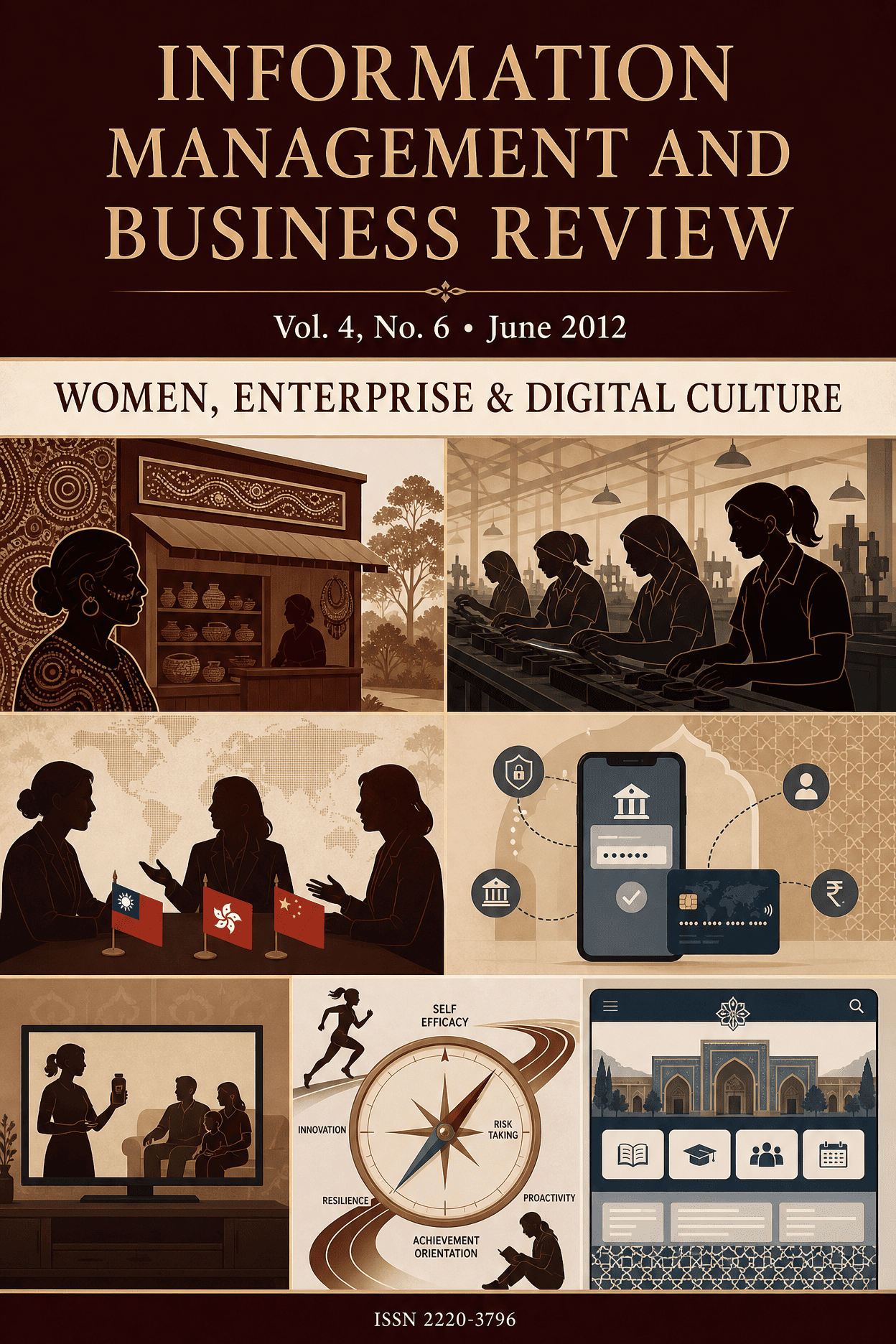
    Conversations with Australian Indigenous Females Revealing Their Motives When Establishing a Sustainable Small Business

    • Author: Cecil A. L. Pearson, Klaus Helms

    The Australian government has expressed commitment for Aboriginal entrepreneurship contending it is a pathway for ameliorating poverty, improving economic self-reliance, and building life quality. Yet a restrained geographic and sector spread of Australian Indigenous small business suggests there may be other important motives for starting an enterprise. This paper narrates responses from conversations with Aboriginal women ata remote settlement in the Northern Territory of Australia to reveal they were driven not by desires to acquire wealth, improve their educational opportunities or to escape poverty, but by practical aspirations of operating a local store selling household commodities used in daily living, a coffee shop meeting place, and to meaningfully change their existing community roles enabling them to ‘get off welfare’. Documenting the experiences and expectations of these Indigenous women exposes how Aboriginal culture, family, and community socialising networks can contribute to fostering female entrepreneurship.

    Pages 299-310

    PDF - Conversations with Australian Indigenous Females Revealing Their Motives When Establishing a Sustainable Small Business (opens in a new tab)
  • Article 2 in this issue

    Socio-Economic Realities at Work: a Study on Female Workers in the SME’s Located in Malaysia

    • Author: Nwanesi Peter Karubi, Muhammad Khalique

    This paper attempted to critically analyse the social/cultural issues faced by women in SME’s located in Penang Island in the heart of Malaysia. Further, it aimed to evaluate the motives and the impact of changing jobs among the Female Factory Workers (FFW) at the SME factories located in Penang Island. SME’s are mainly based on 5 to 250 employees. However, the technical definition varied from country to country in the Asia-Pacific region but was usually based on employment, assets, or a combination of the two. Some countries had different definitions for SME’s in the manufacturing and services sector and may exempt firms from specialized industries or firms that had shareholdings by parent companies. The trends in many SME’s’ factories were to employ a large number of young girls from rural areas or other neighbouring states. The findings of the study depicted that the young women were often underpaid, housed in over-crowed hostels and some often-experienced sexual harassment and salaries withheld.

    Pages 311-316

    PDF - Socio-Economic Realities at Work: a Study on Female Workers in the SME’s Located in Malaysia (opens in a new tab)
  • Article 3 in this issue

    A Comparison on Business Negotiation Styles with Education

    • Author: Yu-Te Tu

    Training and education is important in negotiation. For a trained negotiator, good results are the consequence of knowing when to follow to his/her instincts and when to employ negotiation theories or use a combination of them. As the economics within Greater China become more internally linked together, it becomes increasingly important to understand the nuances of each culture encompassed by this term. There is very little comparing the negotiation styles of Chinese who live in Taiwan, Hong Kong, and China among themselves. To fill the gap, the present research focuses on negotiations style comparison by education among Chinese in Taiwan, Hong Kong, and China. The population was chosen from public companies listed under the stock markets. Data was collected using an online survey technique. SPSS was used to conduct data analyses, and a variety of statistical measures were used, including descriptive statistics and MANOVA, and coefficient alphas was reported for modified instruments in order to address reliability and validity of the instrument. The results indicated that three dimensions-intuitive, normative, and analytical-had a significant relationship affected by education among the three regions. The researcher suggests that the negotiators still need to be trained in body language, strategies, temper control, international manners, and customs. A better knowledge of negotiation should be helpful in understanding business and in realizing which negotiation styles are most appropriate for a particular country. The appropriate negotiation skills can bring more competitive advantages and benefits.

    Pages 317-331

    PDF - A Comparison on Business Negotiation Styles with Education (opens in a new tab)
  • Article 4 in this issue

    Accepting of E-banking among Banking Customers of Pakistan

    • Author: Muhammad Muazzam Mughal, Muhammad Farhan, Kamran Ali, Abdul Jabbar Khan

    E-banking is a platform through which a banking customer can perform its financial or non financial transactions electronically without visiting bank, which not only reduces transaction costs but also saves time.E-banking customers are increasing worldwide but its adoption is low in Pakistan. This study is done to investigate the most important factors which contribute to the espousal of E-banking in Pakistan. For this research primary data was collected from 217 customers of different ages, data was collected by structured questionnaire. Statistical descriptive analysis was used to analyze the data. The results shows that privacy and security, trust, ease of usefulness, knowledge and awareness, inaccessibility and came in person preferences are the factors which affect adoption of E-banking in Pakistani customers. Findings also indicate that banking customers of Pakistan are willing to take on E-banking if proper guideline and awareness is provided to them by banks or banking regularity authorities.

    Pages 332-339

    PDF - Accepting of E-banking among Banking Customers of Pakistan (opens in a new tab)
  • Article 5 in this issue

    Gender Role Portrayal in Television Advertisement: Evidence from Pakistan

    • Author: Abid Ali, Raza Ali, Dileep Kumar, Muhammad Haroon Hafeez, Bushra Ghufran

    This study aims to observe the gender role portrayal in food and non-food television advertisement in Pakistan, in order to find out gender discrimination (if any) and association of gender with different content variables. Content analysis of selected TV commercials was used to fulfill the purpose of this study. Services of two independent coders (business graduates) were utilized to code content variables for a sample of 103 commercials (54 food and 49 non-food commercials). Based on the extant literature, seven content variables were selected for this study including: main product user, voiceover, primary character, end comment, soundtrack level, activity level and aggression level. The gender role portrayals in both food and non-food commercials have been compared and discussed. There exists gender discrimination in Pakistani television advertisement, where males dominate more. The reason behind this phenomenon is expected to lie in social and cultural values. This male dominance is higher in food advertisement as compared to non-food advertisement. Results also favor the association of male character with the relatively higher activity and aggression levels in television commercials. The findings of this study are supportive for key players in advertising industry like advertisers and advertising agencies, for self-regulation of their advertising campaigns with respect to gender role. However, more important implication for them is to know about the forces of traditional cultural values and preferences of target audience, for effective planning of the commercials and forecasting their impact. Such knowledge can provide them a better base to assess the need for self-regulation of their advertising campaigns, guiding them towards making more successful commercials. This study reflects the true picture of gender discrimination in Pakistani television advertisement. It has been concluded using a well defined methodology, provides original data for Pakistan and can be considered a good reference for further analysis.

    Pages 340-351

    PDF - Gender Role Portrayal in Television Advertisement: Evidence from Pakistan (opens in a new tab)
  • Article 6 in this issue

    Identifying the Factors Affecting Entrepreneurial Attitude of Athlete & Non-athlete University Students

    • Author: Reza Mohammad kazemi, Siroos Madandar

    Considering entrepreneurship as a state of mind, we have to admit that nowadays, apart from business and economy, any person can think and act in an entrepreneurial manner. Hence, not only the “entrepreneurship enhancing” policies should not be confined to higher education levels, but also they have to be included in elementary and non-athlete programs. In this study, the level of entrepreneurial attitude, and the effect of some demographic variables on it were investigated among a group of 406 university students in Tehran. The main tool used in this study was the translated Athyde’s ATE questionnaire (attitude towards entrepreneurial business initialization) which was tested for reliability by a pretest and computation of Cronbach’s Alpha coefficient for the main study and all its components. The results showed that the level of entrepreneurial attitude was above average among athlete students, in all of the investigated aspects and components. They also showed that variables such as gender, having a self-employed father, employment status of mother, and the type of university (athlete &non-athlete) have no significant impact on the level of entrepreneurial attitude in students.

    Pages 352-361

    PDF - Identifying the Factors Affecting Entrepreneurial Attitude of Athlete & Non-athlete University Students (opens in a new tab)
  • Article 7 in this issue

    Assessing the Consistency of the Design of Iranian Websites with Cultural Characteristics of their Target Users: An Investigation of the Hofstede Model

    • Author: Maryamossadat Mousavi, Datis Khajeheian

    The influence of culture on the design of websites has been researched extensively. A group of researchers has implemented Hofstede’s Cultural Dimensions as a proper framework to study this subject. The literature supports that cultural characteristics of the Hofstede model are significantly present in the design of websites. It also suggests that making a website compatible with the cultural characteristics of the target users facilitates effective interaction of the users with the websites. Building upon these observations, the present study has investigated the impact of Iranian culture on the design of Iranian university websites. We have measured the consistency of their design with the cultural characteristics of their target users and studied the possible improvements brought about by a culturally harmonious design. To this end, one sample t-test method is applied to compare the scores given by the end users for each cultural dimension, with the scores of the Hofstede model to measure the level of consistency. The results suggest that the design of Iranian university websites represents a more collectivistic and masculine culture with higher indices of power distance than what is specified in the Hofstede model and a change towards a more individualistic, elegant and informal design is necessary for the websites to improve their conformance to the cultural elements of Iranian users and improve their experience. To our knowledge, the present paper is novel in two aspects: firstly, it focuses on the case for Iran, which has not been extensively studied before; secondly, it makes a parallel study to measure the users’ preferences and compares it to the predictions made by the Hofstede model.

    Pages 362-369

    PDF - Assessing the Consistency of the Design of Iranian Websites with Cultural Characteristics of their Target Users: An Investigation of the Hofstede Model (opens in a new tab)