Articles 11–20 of 54

  • Article 11 in this issue

    Determinants of Breast Cancer Knowledge among Public University Students

    • Author: Nor Intan Shamimi Abdul Aziz, Siti Noorsuriani Maon, Nor Azmaniza Azizam, Mohd Redhuan Dzulkipli, Siti Noraini Mohd Tobi, Siti Munira Kamarudin

    Breast cancer is still a leading global health concern, with Malaysia experiencing a notable burden, accounting for approximately 34.1% of all female cancers between 2017 and 2021. The National Cancer Registry highlights the disease as a common cause of death among Malaysian women. Even though the case of breast cancer remains high, the level of breast cancer knowledge is still low, making it difficult to educate the community to effectively fight against the disease. Thus, this study aims to determine the influence of demographic factors and lifestyle factors on breast cancer knowledge and to examine the difference between gender and family history on breast cancer knowledge levels among university students. A cross-sectional survey was conducted with 261 students from the Bachelor’s Degree of Health Administration (Hons.) from Universiti Teknologi Mara, Puncak Alam Campus. Results indicated that gender is an important factor in breast cancer knowledge, with females exhibiting higher knowledge levels. Moreover, physical activity and healthy dietary patterns also emerged as significant predictors of a higher level of knowledge. Future research should continue promoting early screening and prevention, raising awareness of male breast cancer to emphasize its importance alongside female breast cancer. Implementing the gamification technique is an interesting way as an educational tool to attract more community members and improve their health-related knowledge.

    Pages 122-130

    PDF - Determinants of Breast Cancer Knowledge among Public University Students (opens in a new tab)
  • Article 12 in this issue

    Enhancing Employee Resilience Among Private Hospital Healthcare Practitioners (HCPs) in Malaysia: What Factors Matter?

    • Author: Zarith Zulaikha binti Abd Aziz, Aspanorizan binti Hamzah, Norashikin binti Hussein

    The demanding nature of the healthcare industry created a challenging work environment for healthcare practitioners. Such challenges include emotional fatigue, long working hours, rapid decision-making under pressure, and working with critically ill patients, all of which have been exacerbated by the COVID-19 pandemic. High employee resignation rates, heavy workloads, unpredictable work hours, and regulatory and compliance pressures further complicate this challenging situation. As a result, many healthcare practitioners (HCPs) become disengaged and experience burnout. Thus, being resilient is regarded as imperative in aiding HCPs in navigating the challenging work circumstances described. The fact that HCPs must uphold high standards of care despite the challenges makes building resilience essential. This study aimed to address the factors that influence employee resilience, namely self-efficacy, perceived organizational support (POS), and perceived social support (PSS) from family, friends, and significant others among HCPs at a private hospital in Malaysia. A self-administered online survey was employed to gather data from 175 nurses and allied health professionals utilizing a non-probability purposive sampling technique. The findings of this study revealed that only SE, POS, and PSS from a significant other had a significant relationship with employee resilience among HCWs. Interestingly, the present study revealed contrary findings, indicating that PSS from family and friends did not correlate significantly with employee resilience. Several recommendations were developed for the private hospital to strengthen its talent among HCPs.

    Pages 131-145

    PDF - Enhancing Employee Resilience Among Private Hospital Healthcare Practitioners (HCPs) in Malaysia: What Factors Matter? (opens in a new tab)
  • Article 13 in this issue

    HR Practices and Employee Retention: A Study on Automotive Manufacturing Organizations in Malaysia

    • Author: Siti Nadhirah Zulkarnain, Ridhawati Zakaria, Norashikin Hussein, Noor Azura Dahalan, Dayang Nailul Munna Abg Abdullah, Nusrah Samat

    Employee retention remains a critical challenge within the automotive manufacturing sector, where the loss of skilled talent can significantly disrupt operations and competitiveness. This study investigates the impact of four key human resource (HR) practices - rewards and benefits, career development, performance management, and leadership behavior - on employee retention within a major automotive manufacturing organization in Peninsular Malaysia. Grounded in Herzberg’s Two-Factor Theory, a quantitative research design was employed, and data were collected via a survey questionnaire from 650 executive-level employees across the Selangor and Melaka branches, achieving a 95 percent response rate. Statistical analysis was conducted using SPSS version 26, incorporating descriptive, reliability, and multiple regression analyses to examine the relationship between HR practices and employee retention outcomes. The findings indicate that all four HR practices significantly influence employee retention, with career development showing the strongest relationship. The findings emphasize the need for strategic alignment between HR policies and employee expectations to reduce turnover and foster long-term organizational commitment. This study offers both theoretical and practical implications by reinforcing the role of comprehensive HR practices in shaping employee behavior and organizational stability. It provides actionable insights for HR professionals and decision-makers within Malaysia’s manufacturing sector to enhance workforce retention and maintain competitiveness in a dynamic labor market.

    Pages 146-159

    PDF - HR Practices and Employee Retention: A Study on Automotive Manufacturing Organizations in Malaysia (opens in a new tab)
  • Article 14 in this issue

    Insuring Where the Heart Is: Key Drivers Influencing Houseowner and Householder Insurance Adoption in Puncak Alam, Selangor

    • Author: Ainol Fizy Ruslan, Mohd Faizol Rizal Mohd Rasid, Nurul Hidayah Zainal, Ahmad Al-Amin Faisal, Muhammad Hafiz Marzuki, Nurul Farehah Anuar

    The increasing frequency of climate-related disasters such as floods, fires, and extreme weather events in Malaysia has amplified the urgency for adequate home protection. However, underinsurance remains a critical issue, with less than half of Malaysian households holding fire or home insurance policies. This leaves millions, especially in high-risk areas such as Puncak Alam, Selangor, exposed to financial vulnerability. This study investigates the key drivers influencing homeowners’ intentions to purchase homeowner and household insurance, focusing on awareness, perceived adequacy of product coverage, and household income. Guided by Protection Motivation Theory and principles of consumer behavior, the study employed a quantitative research design. A structured survey was distributed to 100 property owners using convenience sampling. Descriptive and Pearson correlation analyses were conducted to examine the relationship between the independent variables and purchase intention. Findings indicate that awareness, product coverage, and income are all significantly and positively associated with purchasing insurance. Respondents with a better understanding of policy coverage and greater financial capacity were more likely to consider insurance as a critical part of their financial planning. However, response variation indicates continued gaps in product understanding and cost accessibility, particularly for extended coverage. The study recommends that insurers develop clearer communication strategies and educational outreach to address these gaps. Policymakers are also urged to consider initiatives such as subsidies or mandatory minimum coverage to improve insurance accessibility for vulnerable groups. Ultimately, property insurance must be recognized as an essential pillar of personal resilience and national disaster preparedness.

    Pages 160-174

    PDF - Insuring Where the Heart Is: Key Drivers Influencing Houseowner and Householder Insurance Adoption in Puncak Alam, Selangor (opens in a new tab)
  • Article 15 in this issue

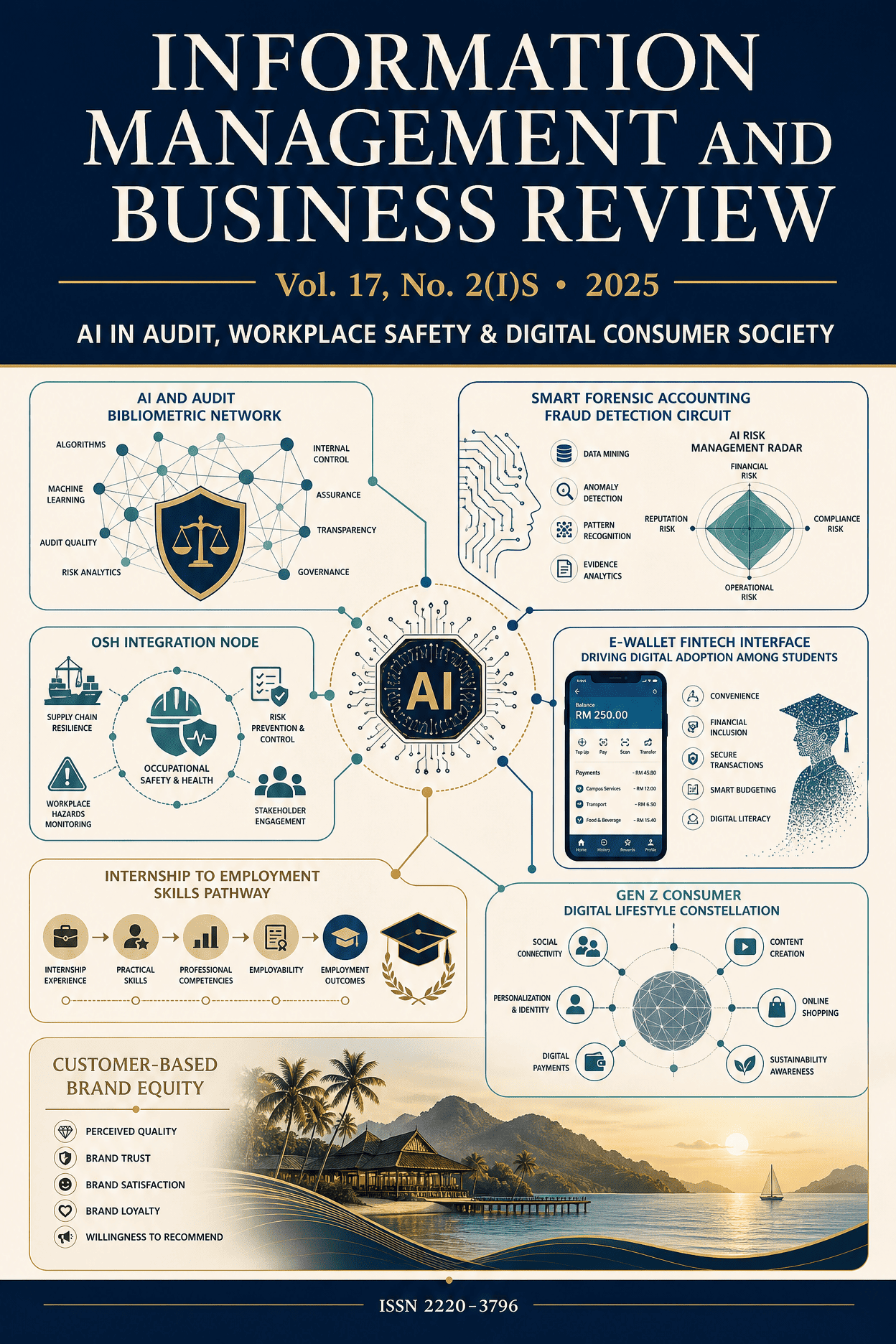
    OSH Integration in Malaysian Supply Chains: A Stakeholder Engagement and Social Exchange Analysis for Enhanced Resilience

    • Author: Faizatul Akmam Amirrudin, Norina Ahmad Jamil, Mashitah Mohamed Esa, Veera Pandiyan Kaliani Sundram, Normazlena Che Mahmood

    In pharmaceutical companies in Malaysia, employee retention is a huge responsibility for Human Resources Management. In today’s global economic landscape, many companies are moving towards globalization, and employees are more inclined to change organizations in search of better opportunities and growth. This has become a major concern, and retaining employees has been one of the competitive strategies because employees leaving the organization carry with them their skills and knowledge. The main focus of this study is to understand the factors that influence employee retention at pharmaceutical companies in Malaysia. The research objectives were to examine whether reward, career advancement, and manager engagement have a significant influence on employee retention in pharmaceutical companies in Malaysia. This is a correlation study focusing on the relationship between rewards, career advancement, manager engagement, and employee retention in pharmaceutical companies. This research was conducted in a natural setting in a non-contrived manner using non-probability convenience sampling. A questionnaire was distributed to 400 employees working for pharmaceutical companies in Malaysia, regardless of position. The validity and reliability of the questionnaire were checked, and responses were collected and analyzed via SPSS software. The analysis and research findings showed that rewards, career advancement, and manager engagement positively influenced the retention of employees in pharmaceutical companies in Malaysia. All independent variables show a significant beta coefficient, with a p-value of 0.00 for rewards and career advancement and a p-value of 0.001 for the manager’s engagement. The result supported the hypotheses and was accepted.

    Pages 175-185

    PDF - OSH Integration in Malaysian Supply Chains: A Stakeholder Engagement and Social Exchange Analysis for Enhanced Resilience (opens in a new tab)
  • Article 16 in this issue

    Green Supply Chain Management Adoption’s Internal and External Barriers in Malaysia Construction Industry: A Case Study

    • Author: Nurzahela Jamil, Mohd Hafiz Zulfakar

    The construction industry has significantly strengthened Malaysia's economy; however, its swift growth has also influenced the environment and could potentially impact the population. The Malaysian government has committed to promoting the adoption of sustainable practices among construction companies nationwide. Although Green Supply Chain Management (GSCM) has been introduced over the past decade, the majority of construction companies in Malaysia still have not adopted GSCM practices within the construction industry. This qualitative study aimed to pinpoint the internal and external obstacles to the implementation of GSCM. Focusing on the Malaysian construction industry, the research employed a qualitative methodology. Purposive sampling was used to select twelve managerial-level participants from various stakeholders, including clients, contractors, government officers, and consultants. Semi-structured face-to-face interviews served as the primary method for data collection, and the gathered information was meticulously analyzed using a thematic analysis approach. The findings of this study revealed four internal obstacles that organisations face: operational disruption, lack of awareness, lack of knowledge and expertise, and high initial costs. On the other hand, the study revealed five external challenges: insufficient coordination, low market demand, regulatory and policy barriers, and a lack of government incentives. The comprehensive findings and discussions presented in this study are expected to contribute positively to ongoing efforts in implementing GSCM within the Malaysian construction sector, providing valuable insights for policymakers and industry practitioners.

    Pages 186-202

    PDF - Green Supply Chain Management Adoption’s Internal and External Barriers in Malaysia Construction Industry: A Case Study (opens in a new tab)
  • Article 17 in this issue

    5s Quality Management Practices with Sejahtera Ulul Albab of Micro, Small and Medium Enterprises in Malaysia

    • Author: Dolhadi Zainudin, Suhaimi Mhd Sarif, Yusof Ismail, Sharifah Fazirah Syed Ahmad

    This study investigates the strategic embedding of 5S quality management practices within the Sejahtera Ulul Albab paradigm among Malaysian Micro, Small, and Medium Enterprises (MSMEs). Drawing on semi-structured interviews with 12 MSME managers across the food, halal services, and manufacturing sectors, the research reveals that while 5S—Sort (Seiri), Set in Order (Seiton), Shine (Seiso), Standardize (Seiketsu), and Sustain (Shitsuke)—enhances operational discipline and lean outcomes, its integration with Islamic philosophical anchors such as niyyah (intention), amanah (trust), and taqwa (God-consciousness) repositions quality management as a spiritually driven endeavor. The findings demonstrate that ethical leadership, communal purpose, and spiritual accountability significantly amplify the effectiveness, consistency, and sustainability of 5S implementation. The study proposes a conceptual framework that reconceptualizes 5S as a multidimensional resource that fosters both strategic advantage and divine accountability within the Tawhidic worldview. This integrative approach advances theory by bridging operational efficiency with Islamic epistemology and offers practical guidance for value-driven business practices. However, the study is limited to a qualitative exploration within selected sectors. Thus, future research may adopt a mixed-methods design or cross-regional comparison to validate and extend the proposed framework's applicability and scalability.

    Pages 203-217

    PDF - 5s Quality Management Practices with Sejahtera Ulul Albab of Micro, Small and Medium Enterprises in Malaysia (opens in a new tab)
  • Article 18 in this issue

    Financial Literacy as a Mediator of Young Generation Intention to Invest in Islamic Crowdfunding in Malaysia

    • Author: Hairunnisa Mohamad Ibrahim, Noor Azillah Mohamad Ali

    Islamic crowdfunding, which is a legitimate and halal form of financing, is also increasing in popularity among Malaysian youths because Malaysia has established a very strong infrastructure in the Islamic finance sector. Nevertheless, it has remained low primarily because of low Financial Literacy, awareness, and trust in the digital platform of investing. This research seeks to determine how financial literacy influences the TPB of young Malaysians in its ability to influence the intention of young Malaysians to fund an Islamic crowdfunding platform. A quantitative approach was used, specifically a cross-sectional survey design, with 437 youths from Malaysia’s Klang Valley region. The Partial Least Squares Structural Equation Modeling (PLS-SEM) technique was used to analyze the data. Findings indicated that perceived subjective norms and perceived behavioral control jointly affected intentions to invest and were partially explained by financial literacy. However, there was no main effect of attitude on the dependent variable, although it was inclusively mediated by financial literacy. Implications reveal significant implications for promoting investment intention and heightening financial literacy as a way of reversing barriers to participation that characterize Islamic crowdfunding. Such findings provide significant suggestions to the policymakers and educators, alongside the platform provides for enhancing the ethical Malaysian financial solutions and economic improvement. Thus, this research contributes to knowledge by discussing the moderating role of financial literacy on the TPB constructs in the Islamic crowdfunding context.

    Pages 218-229

    PDF - Financial Literacy as a Mediator of Young Generation Intention to Invest in Islamic Crowdfunding in Malaysia (opens in a new tab)
  • Article 19 in this issue

    A Study on the Awareness of Air Travellers Towards Travel Insurance

    • Author: Faziatul Amillia Mohamad Basir, Nurul Hidayah Zainal, Mohd Faizol Rizal Mohd Rasid, Ainol Fizy Ruslan, Wan Nur Fatihah Rohaizad

    Discovering different cultures and experiences is made possible through travel. However, even the best-planned trips can be derailed by unanticipated circumstances. It takes more than simply packing your luggage and making your travel arrangements to ensure a successful journey. Many people fail to consider important factors that offer comfort. The objective of this study is to investigate people's awareness of the existence of risk from aircraft and the importance of travel insurance in protecting themselves from any unexpected event. Additionally, this study aims to explore the factors, such as attitude, knowledge, and promotion, which influence travel insurance awareness. Purposive sampling was used in this study, and 100 online surveys were distributed around Malaysia. After the survey is completed, the results will be analysed to determine the primary factors influencing this study and whether or not respondents believe that travel insurance is necessary. Any pertinent party may find this research helpful in raising public awareness of the value of travel insurance.

    Pages 230-240

    PDF - A Study on the Awareness of Air Travellers Towards Travel Insurance (opens in a new tab)
  • Article 20 in this issue

    Trends in Artificial Intelligence and Educational Technology: A Systematic Analysis

    • Author: Mohd Faireez Bin Mohd Hanafiah, Noor Zalina Zainal, Erne Suzila Kassim

    The faster evolution of artificial intelligence (AI) is changing the field of education by making teaching and learning more personalized, adaptive, and data-driven. As AI gets further integrated into educational technologies (EdTech), student engagement is enhanced by chatbots, VR/AR, intelligent tutors, and ML algorithms, boosting academic achievement and the development of reasoning skills. This change was faster during the COVID-19 pandemic because of the greater emphasis on the role of technology in education, its possibilities, and shortcomings. At the same time, there is increased use of AI-powered technologies in education, and the more prominent ethical issues these technologies pose are algorithmic discrimination, data security, and the implications of systems’ autonomy in making judgments. This research examines the effects of Artificial Intelligence (AI) on Education within the years 2021 - 2025, utilizing a systematic literature review (SLR) and bibliometric analysis through the VOSviewer software. Results delineate dominant research clusters and depict a shift from examining general applications of technology to more nuanced, emerging advancements like contrastive learning and adversarial techniques. The research draws attention to implementing AI in education responsibly while outlining further steps in research and policymaking to ensure educational AI is used to its fullest potential while protecting academic accessibility and institutional neutrality.

    Pages 241-247

    PDF - Trends in Artificial Intelligence and Educational Technology: A Systematic Analysis (opens in a new tab)