Articles 11–20 of 70

  • Article 11 in this issue

    Systematic Visual Documentation of the Mah Meri Tribe's Cultural Practices

    • Author: Mohd Shariful Hafizal Aminuddin, Fadli Abd Razak, Fadhil Kamarudin

    The purpose of photography is identical to that of language and writing. Photography's operation must be evaluated in light of various explanatory, interpretative, and theoretical linguistic assertions due to visual art's multifaceted and multifunctional nature. In documentary photography, people, situations, objects, and events are depicted straightforwardly and narratively; This paper first gives a brief overview of the history and facts related to the beliefs and culture of the Mah Meri tribe in Peninsular Malaysia in photo documentary reporting. The primary purpose of this research is to conduct a thorough analysis of cultural traditions and environmentalist ideals. Accordingly, Mah Meri requires systematic and organized visual data, and the collection of qualitative data is essential. In a phased study, ethnomethodological techniques were used to collect periodic primary data. Throughout this systematic documentation procedure, more time was needed to collect in-depth information about personal lifestyles and religious practices. In conclusion, this research contributes to the modern accessibility of digital data sources by achieving an understanding of the Mah Meri tribe through the discovery and deconstruction of traditional beliefs unknown to the public.

    Pages 90-102

    PDF - Systematic Visual Documentation of the Mah Meri Tribe's Cultural Practices (opens in a new tab)
  • Article 12 in this issue

    Symbolic Interpretations of Mah Meri Visual Art: A Conceptual Approach Using Peirce’s Semiotic Theory

    • Author: Fadli Abd Razak, Mohd Shariful Hafizal Aminuddin, Mohd Fadhil Kamarudin, Mohd Shahrizal Mat Hussin, Aidah Alias

    This study examines the visual art heritage of the Mah Meri tribe through a semiotic analysis. The research uses Charles Sanders Peirce's Semiotic Theory as the foundational framework to decode the symbolism embedded in Mah Meri's artistic expressions. The aim is to understand and document the deep meanings behind these symbols and their impact on the cultural identity and historical narratives of the Mah Meri tribe. An ethnographic approach is employed for data collection, including field observations, photographic and videographic documentation, and qualitative interviews with community members. The findings reveal that Mah Meri's art is rich in symbolic meanings that reflect the tribe's cultural identity and history. The study also highlights the adverse effects of modernization on traditional art forms, necessitating urgent preservation efforts. This research makes significant contributions to visual anthropology by emphasizing the importance of semiotic analysis in understanding and preserving indigenous art. It calls for increased efforts in documenting and protecting the visual heritage of the Mah Meri tribe to ensure its transmission to future generations.

    Pages 103-106

    PDF - Symbolic Interpretations of Mah Meri Visual Art: A Conceptual Approach Using Peirce’s Semiotic Theory (opens in a new tab)
  • Article 13 in this issue

    The Impact of Eco-Friendly Perceptions on Festival Attendees’ Decision-Making

    • Author: Nurakmal Ramli, Ayu Rohaidah Ghazali, Norhidayah Mohd Rashid, Azzura Nordin, Norol Hamiza Zamzuri

    People are becoming increasingly concerned with environment as the society becomes more environmentally conscious and this is on a global basis. Festivalgoers are now very much concerned about the environmental impact of the events they go to, a consumer behavior shift. As a result of that, festival organizers are taking this into account when developing their strategies for future festivals. This research examines the influence of eco-friendly perceptions on the decision-making process among festival visitors. The study used an extended version of the planned behavior model which takes into account attitudes, subjective norms, anticipated positive emotions, expected negative emotions, and perceived behavioral control concerning decision-making. This correlation study focuses on attitudes towards attending eco-friendly events in terms of behavioral intention, subjective norms, positive anticipated emotion, negative anticipated emotion, and perceived behavioral control. 197 data sets were collected through convenience sampling of event management students at UiTM Puncak Alam via different online platforms were used for the analysis. The SPSS was used for the analysis of results through reliability tests, correlations, and regressions. The result indicated that there was a significant relationship between all the variables involved in participating in eco-friendly events. Four independent variables show a significant beta coefficient for subjective norm, positive anticipated emotion, negative anticipated emotions, and perceived behavioral control. Meanwhile, another independent variable, attitude does not significantly influence behavioral intentions. The limitations, recommendations, and implications of the study were suggested for future research.

    Pages 107-113

    PDF - The Impact of Eco-Friendly Perceptions on Festival Attendees’ Decision-Making (opens in a new tab)
  • Article 14 in this issue

    Regression Analysis of Dimensions Event Volunteer Motivation Towards Intention to Volunteer

    • Author: Norhidayah Mohd Rashid, Nurakmal Ramli, Ayu Rohaidah Ghazali, Azzura Nordin, Norol Hamiza Zamzuri, Shazril Saridan

    Volunteerism at events, from small to large-scale festivals such as sporting competitions, is critical to their success. Understanding event volunteers' motivations is crucial for organizers in terms of recruiting, retaining, and managing volunteer resources efficiently. This study aims to examine the relationship between dimensions of event volunteer motivation which include leisure motivation, purposive motivation, egoistic motivation and external influence on the intention to volunteer. Previous studies have found that these multidimensional motivational factors are essential for fostering an individual’s decision-making process towards volunteering at an event. Positive effects on volunteer motivation will be analyzed using regression analysis in this research. In general, the results derived from the study will assist event organizers in understanding how their volunteers make decisions about taking part in the festivals they organize as well as designing ways of recruiting, managing and holding onto them for attaining ultimate success during such occasions.

    Pages 114-121

    PDF - Regression Analysis of Dimensions Event Volunteer Motivation Towards Intention to Volunteer (opens in a new tab)
  • Article 15 in this issue

    A Study on Volunteer Motivation and Satisfaction in Malaysia's Sports Events

    • Author: Ayu Rohaidah Ghazali, Nurakmal Ramli, Norol Hamiza Zamzuri, Norhidayah Mohd Rashid, Abdul Hamid Abdul Halim

    Despite the critical role of volunteers in the success of sports events, there is limited research in Malaysia on how volunteer motivations and experiences impact their satisfaction. This research examines volunteers' vital role in ensuring successful sports events, emphasizing volunteer motivation, experience and satisfaction among undergraduates and postgraduate students at a local Malaysian university. The study utilizes quantitative analysis where significant correlations between these variables were discovered revealing that volunteer motivation and positive event experiences are important to enhancing volunteer satisfaction. Data from eighty students (80) showed that event-related factors such as the opportunity to be part of a prestige event and witness behind-the-scenes activities are significant motivators and key drivers of voluntary participation. The findings indicate a significant beta coefficient supporting event-related motivation and volunteer experience towards volunteer satisfaction while purposive volunteer motivation did not gain significance. Overall, the research underscores the necessity for event planners to prioritize volunteer satisfaction by understanding and addressing their motivations and experiences, ultimately contributing to more meaningful and successful events.

    Pages 122-129

    PDF - A Study on Volunteer Motivation and Satisfaction in Malaysia's Sports Events (opens in a new tab)
  • Article 16 in this issue

    A Change in Event Tourism: Developing Business Model for Sulayau Fabric as Community-Based Tourism Event Attraction

    • Author: Norol Hamiza Zamzuri, Abdul Kadir Othman, Sharmila Mohamed Salleh, Hema Zulaikha Hashim, Rahman Rosman, Rusmawati Ghazali, Jacqueline Koh Siew Len, Sharifah Norafizah Syed Annuar

    This study explores the best model for community-based tourism events (CBTE) model with the inclusion of social innovation as part of the process. Producing Sulayau fabric is seen as a factor that contributes to the development of social innovation activities among the community in Sabah. Two workshops were conducted to empower communities to understand the use of the new social innovation tool known as Memating and gave support to those communities to improve the quality of their participation in tourism. Semistructured interviews and observation were used as data collection techniques. The results revealed two interesting findings the need for using the social innovation tool of Memating in increasing efficiency among craft traders and the need for marketing strategies in creating visibility of Sulayau fabric in Sabah. Future studies are required for an empirical discussion in understanding how the role of social innovation shapes community-based tourism events.

    Pages 130-139

    PDF - A Change in Event Tourism: Developing Business Model for Sulayau Fabric as Community-Based Tourism Event Attraction (opens in a new tab)
  • Article 17 in this issue

    Examining the contributing factors of virtual event quality toward event satisfaction among attendees

    • Author: Azzura Nordin, Siti Noorsuriani Maon, Mohd Redhuan Dzulkipli, Annurizal Anuar

    Due to the rising acceptance of virtual events, more empirical studies are needed to determine factors influencing attendees’ satisfaction. It is crucial to comprehend the essential factors determining the quality of virtual events as the virtual world continues to define the future of event experiences. Given these considerations, event planners may create and deploy virtual experiences meeting the diverse needs and preferences of the attendees. Hence, the main purpose of this paper is to examine the influence of virtual event quality dimensions on the level of event satisfaction among the attendees. A cross-sectional study was undertaken by administering a survey instrument to collect response data from participants in virtual events. There were 124 valid responses obtained for data analysis. Descriptive and inferential analyses were performed using IBM SPSS version 28. The study findings revealed that there was a statistically significant relationship between the quality of virtual event factors and event satisfaction among the attendees. The results of regression analysis indicated that vividness (p=0.016), functionality (p=0.003), entertainment (p=0.029), fulfillment (p=0.037), privacy (p=0.037), and social presence (p=0.001) were found to be significant predictors of event satisfaction. In conclusion, this study highlights the importance of considering several factors of event quality, particularly in planning and implementing virtual events. Event organizers can enhance attendees’ satisfaction through the use of more immersive and substantial virtual experiences, by focusing on attributes such as vividness, functionality, entertainment, fulfillment, privacy and social presence.

    Pages 140-148

    PDF - Examining the contributing factors of virtual event quality toward event satisfaction among attendees (opens in a new tab)
  • Article 18 in this issue

    The Cultural Event Typology in Bali

    • Author: Peni Zulandari Suroto, Yudo Hartono

    There is limited research focusing on festivals and cultural events. This study aims to enrich previous research on event typology, particularly in cultural events. Additionally, the findings of this research can be applied by event practitioners. This is particularly valuable for organizers from outside Bali who may not be familiar with local wisdom and regulations. A qualitative approach was used to have a better understanding of ritual practices and culture. The researcher observed three cultural events in 2024: the Piodalan and Pengerupukan ceremonies in a village in Gianyar Regency, and the Ogoh-ogoh competition in Denpasar city, Bali, Indonesia. In addition, in-depth interviews were conducted with the village head and unstructured interviews with the participants of the ceremonies. Thematic analysis was conducted to obtain dimensions. Four dimensions of cultural events were found: (1) management – who manages and how the event is managed, (2) function – the purpose of the performing arts, (3) objective – the goal of the event, and (4) audience – who attends the event. This domain was then combined with the typology of performing arts according to Balinese local wisdom, broadly divided into sacred and profane performances, which include Wali, Bebalih, and Balihbalihan dances. This combination was reflected in a matrix of event typologies in Bali. Further research could explore the audience's or the artists' perspectives on presenting each type of performing arts. Expanding the number of villages could also provide insights into different rituals in other villages in Bali.

    Pages 149-156

    PDF - The Cultural Event Typology in Bali (opens in a new tab)
  • Article 19 in this issue

    Cultural Event Development Model for Quality Improvement of Tourism Event: Case of the 3rd Fishing Boat Festival in Sungsang Village IV, Banyuasin Regency, South Sumatra Province

    • Author: Muhammad Iqbal Djohan, Budi Wibowo, Peni Zulandari Suroto

    Tourism related to events is a representation of the selling power of the location where the event is held. Festival events have an important role in increasing the selling value of destinations, but this study found that the 3rd Fishing Boat Festival event has not been packaged properly and there is no target market database targeted as tourists. This study aims to create a model for the development of cultural festivals, based on 5 basic stages, namely research, design, planning, coordination, evaluation and compiling a template for providing a database of targets and target tourists using the definable, sizeable, reachable, relevant segmentation method. This study used a combination method or mixed method with a sequential explanatory design with a sample of 100 respondents with 3 data collection techniques, namely by direct observation, document study, and interview. This research resulted in 5 stages consisting of 40 steps of festival event management, as well as the targeted tourist segmentation profile. The research contributes to the achievement of the goal of improving the quality of cultural events in tourism villages.

    Pages 157-165

    PDF - Cultural Event Development Model for Quality Improvement of Tourism Event: Case of the 3rd Fishing Boat Festival in Sungsang Village IV, Banyuasin Regency, South Sumatra Province (opens in a new tab)
  • Article 20 in this issue

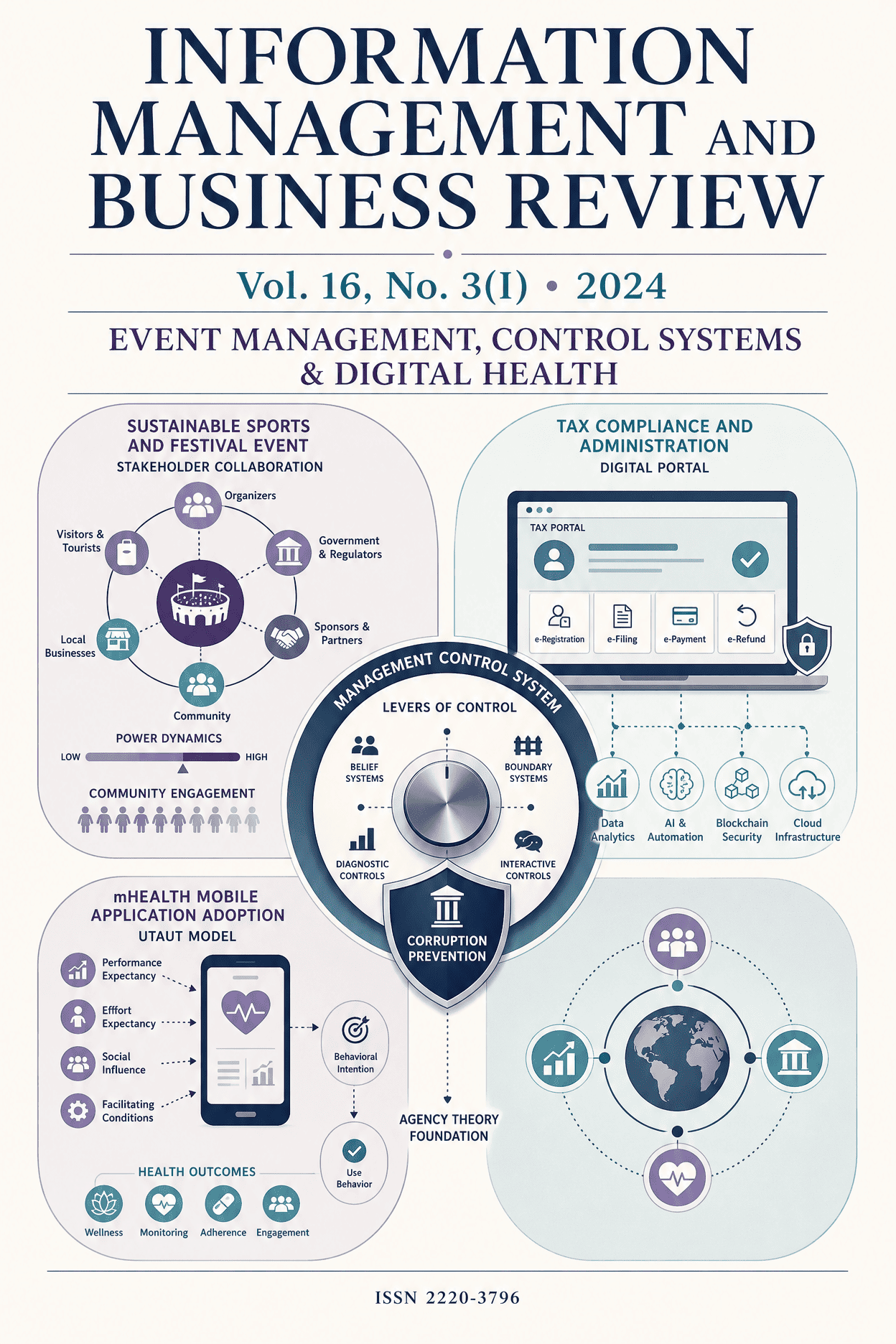
    The Role of Management Control System in Mitigating Corruption: The Levers of Control Perspective

    • Author: Noor Hasniza Haron, Norhayati Alias, Tuan Zainun Tuan Mat, Mazurina Mohd Ali, Noraini Johan

    A Management Control System (MCS) is a comprehensive mechanism organizations can use to ensure that their strategies and plans are effectively implemented to achieve their objectives. This concept paper explores the application of Management Control Systems (MCS), specifically concerning levers of control (LOC), for behavioral control. Based on the comprehensive literature review, it is expected that LOC will be able to provide a pathway to mitigate corruption not only from the perspective of fraud diamond theory but also from the perspective of agency theory. Agency theory highlights the inherent conflict of interest between agents, who have more information about their actions and intentions, and principals, who rely on agents to act in their best interest. This information asymmetry creates opportunities for agents to engage in corrupt practices, such as embezzlement, bribery, or fraud, including unethical behavior that may undermine organizational goals and trust. Effective control mechanisms are essential to mitigate these risks and ensure alignment between agents' actions and principals' objectives. Furthermore, organizations can apply the principles of fraud diamond theory when creating an effective control framework to deter corruption .

    Pages 166-173

    PDF - The Role of Management Control System in Mitigating Corruption: The Levers of Control Perspective (opens in a new tab)